Real Life Matters

A blog about what is real in life, and what matters

“Careful the things you say, children will listen, careful the things you do, children will see, and learn.” – Stephen Sondheim
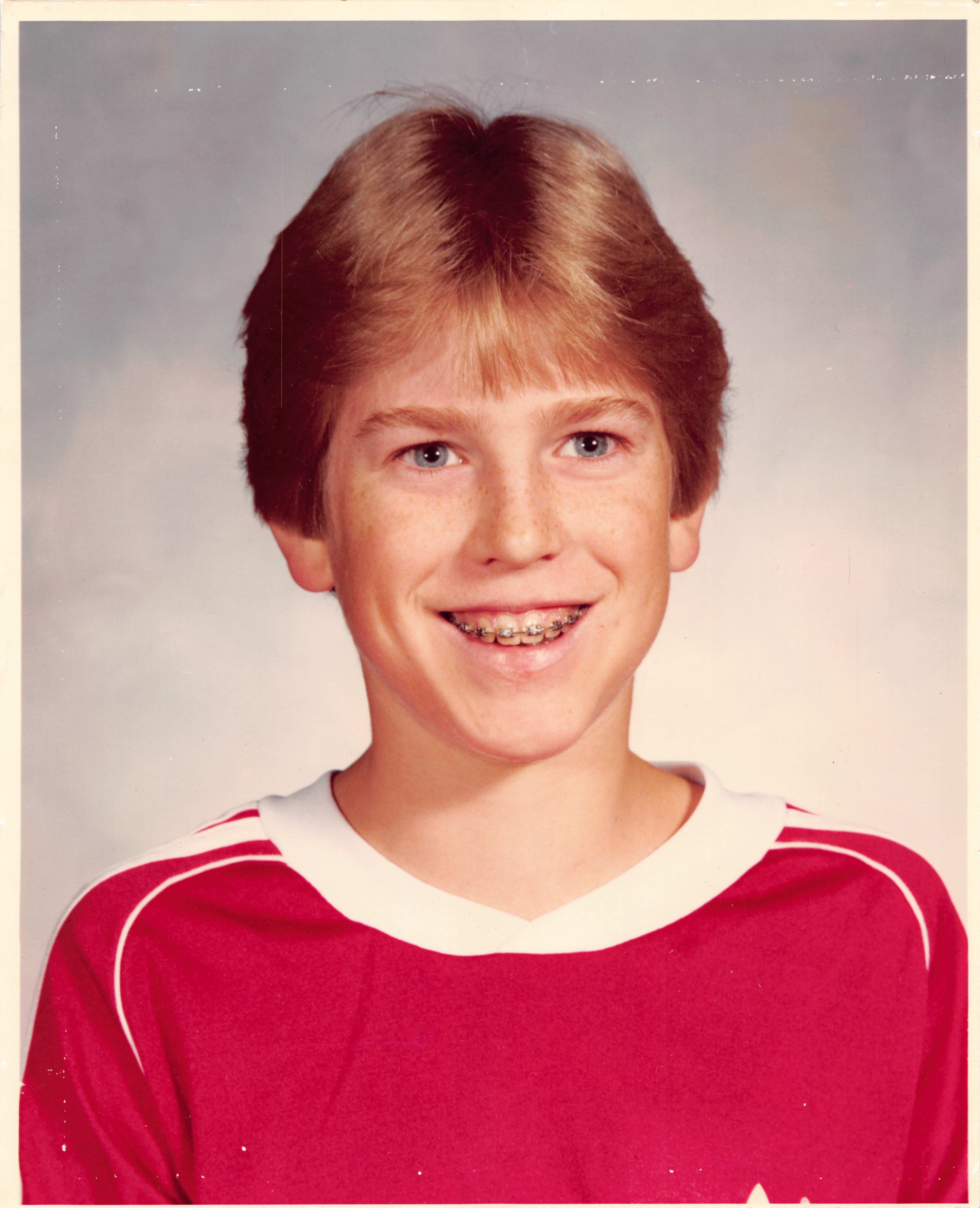
Freshman Year, Clarenceville High School (1981)

When I was a freshman in high school, I took a class in Algebra. When I asked my mom for some help with my homework, she sat me down and told me, “I was not good at math. You will not be good at it either.” Not surprisingly, I performed as my mom had predicted.

In the beginning of my sophomore year, my best friend, Jim, and I discovered, that if we stood in front of a local liquor store long enough with a five dollar bill, eventually some unscrupulous stranger would buy us a bottle of Boone’s Farm. My favorite was Strawberry Hill. This fine aperitif was featured in a hilarious TV ad featuring a motorcycle-riding granny. Walmart evidently still sells Strawberry Hill, though the recipe is now different.

In my sophomore year, I also signed up for Geometry with Mr. Larson. He had good intentions, but some of his methods at motivating kids were decidedly old school. Teasing and shaming were not off the table in Mr. Larson’s instructional bag of tricks.

On the first day of Geometry, Mr. Larson announced to us that he was going to treat us all as adults. He would require homework to be done every night, but we didn’t need to turn it in until Friday. One look around the classroom made it obvious that this was a huge mistake for some of us. In my brain I immediately translated his instructions to: “Hooray! No homework, except on Thursday evenings!” Once again, I performed as my mom had predicted.

As a 15-year old, prepubescent boy with an enormous chip on my shoulder, I found Strawberry Hill to be way more interesting than the the Pythagorean theorem. By this time, I had already internalized my mom’s statement about math and considered my future in science and technology to be hopeless. I believed – wrongly as it turns out – that I just wasn’t smart in that way.

As a 15-year old boy with a fondness for Boone’s Farm, my continuing membership in Boy Scout Troop 288 in Livonia, Michigan, didn’t stand a chance. I had loved Boy Scouts, but I dropped out in my sophomore year, having achieved the rank of Life Scout. My parents didn’t say much when I announced my decision. I don’t recall getting any encouragement to stay the course. In my own underdeveloped mind, I told myself: “What good is an Eagle badge, when there are so many different flavors of Boone’s Farm to try, not to mention Peppermint Schnapps, Southern Comfort, Michelob, Mickey’s, Bacardi Rum and who knows what else?” Alcohol offered what I believed to be a quick and effective escape from my performance anxiety at school and in life.

My parents took a laissez-faire approach to parenting. They shrugged their shoulders and must have told themselves that I would soon be on to bigger and better things of my own enlightened choosing. Indeed, the customary approach in my household with respect to any problem or transgression was to not say anything at all. Conflict was never resolved. If the car engine is making a strange sound, all you need to do is turn up the radio. Problem solved!

One fall afternoon in Geometry class, Mr. Larson called on me to solve a math problem that required me to calculate the number that is 50% of 150. By this time in my life, I had already internalized what my mom told me about my math handicap. I froze. I’m certain that if Mr. Larson had asked me to state my full name and birthdate, I would have stared blankly at him, unable to speak. To this day I have an incredibly clear memory of the entire class laughing at me and Mr. Larson shaking his head and asking incredulously: “Tim, you have a dollar fifty in your hand. How many quarters would you need to give me so that I would have half of them?” I didn’t have a clue because my brain had already shut down. It was a fight or flight situation and my brain responded accordingly.

Mr. Larson also coached the swim team. I swam with the team during my freshman year. I was, by far, the slowest swimmer on the team. In my defense, I was still in a boy’s body competing against more capable young men. I was assigned to swim the 500-free, which is 20 lengths of freestyle swimming in a 25 yard pool. My technique was adequate, but my pace was excruciatingly slow. I felt horrible finishing the race all on my own, climbing out of the pool to see all of my teammates already sitting on the bench and all of the adults looking down on me from the bleachers. Competitive swimming was added to my internal list of failures. Of course, I didn’t tell anyone about my insecurities. I tried to cover and not care. Not surprisingly, my first year on the swim team was also my last year on the swim team. I replaced the void by swimming in Strawberry Hill.

Shame is powerful. It has been referred to as the “master emotion.”

What is Shame?

Shame is the intensely painful feeling or experience of believing that we are flawed and therefore unworthy of love, belonging, and connection. Brene Brown. Dare to Lead: Brave Work. Tough Conversations. Whole Hearts (Kindle edition p. 122).

According to Brown:

  1. Shame is universal and one of the most primitive human emotions that we experience. The only people who don’t experience shame are those who lack the capacity for empathy and human connection.
  2. We’re all afraid to talk about shame. Just the word is uncomfortable.
  3. The less we talk about shame, the more control it has over our lives. Bad things grow in the dark.

(Brown, p. 127). Signs of shame in an organization or family include:

  • Perfectionism
  • Favoritism
  • Gossiping
  • Back-channeling
  • Comparison
  • Self-worth tied to productivity
  • Harassment
  • Discrimination
  • Power over
  • Bullying
  • Blaming
  • Teasing (e.g. nicknames)
  • Cover-ups

(Brown, p. 127). Signs of shame in a person include:

  • feelings of low self-worth arising from unwanted identity (e.g., sick, unreliable, and undependable)
  • addictions
  • secrets
  • abuse
  • violence
  • aggression
  • depression
  • eating disorders
  • unethical behavior
  • entitlement
  • self-aggrandizement
  • victim mentality
  • suicide

(Brown, p. 127)

Guilt, Humiliation and Embarrassment

Guilt, humiliation and embarrassment are not shame, though they are perhaps close cousins of shame.

Guilt

  • is a feeling that I did something bad. Shame, on the other hand, is a feeling that I am something bad.
  • is a powerful and socially adaptive emotion. When we apologize for something we’ve done, make amends, or change a behavior that doesn’t align with our values, guilt (not shame) is most often the driving force.
  • is a psychologically uncomfortable feeling, but one that’s helpful. The discomfort of cognitive dissonance is what drives meaningful change. Shame, however, corrodes the very part of us that believes we can change and do better.
  • is negatively correlated with the outward signs of shame.

Humiliation

  • is a word that we often confuse with shame.
  • is less destructive than shame. People do not believe that they deserve to be humiliated.
  • feels terrible and makes for a miserable work or home environment.
  • can lead to shame if we start to buy into the humiliating messaging.

Embarrassment

  • is normally fleeting.
  • can usually eventually be funny.
  • does not make us feel alone.

If I could enter a time machine now, here are some things I would like to say, breaking through my shame in the year 1981:

To my mom and dad: ”Would you guys be willing to give me some advice here? I am just a kid and I don’t have a clue about whether it would be a good idea for me to drop out of Boy Scouts and quit the swim team.”

To my mom and dad: ”I am feeling very anxious about my life. I feel like you have huge expectations of me, and yet I don’t feel free to talk about my problems with you because we never talk about problems like this in any constructive way. Can we be real for a change? I could really use some help from you. I’m just a kid.”

To the stranger in front of the liquor store: “Please don’t take our money and buy us Strawberry Hill. We are not old enough to drink, it is not right for you to supply us with alcohol and I can assure you we have no idea how to drink responsibly.”

To Mr. Larson: “Would it be ok with you if I turn in my homework each day to you? I don’t have enough confidence in myself, with all that is going on in my life, to do my homework every day without someone to keep me accountable. Plus, I am nervous about geometry because my mom told me that I am not very good at math.”

To Mr. Larson: “Would you please not laugh and poke fun of me? I am super embarrassed by this situation and I am finding it impossible to think straight with all that is happening right now in this classroom.”

To myself: “Tim, give yourself some credit here. It is a very brave thing for you to keep swimming after everyone else has finished. When you get your growth spurt, you will be able to compete with these other swimmers. Don’t worry about your speed right now. Just focus on being the best swimmer that you are able to be. Take the long view. Your time will come, and you will be amazed at how fast you will be able to swim the 500-free.”

Some things really need to be said out loud to stop the shame. Children will listen.

“When we try to pick out anything by itself, we find it hitched to everything else in the universe.” – John Muir

Shelldrake Lake at sunset in Paradise, Michigan

My favorite thing to do these days is head deep into the woods. I’m not very fast, and sometimes my gait is downright comical. Cue Monty Python’s “Ministry of Silly Walks”! None of this matters at all when I’m in the woods. The whole point in going there, after all, is to slow down.

Perspective

Being in the woods brings immediate perspective to my life:

“Distance changes utterly when you take the world on foot. A mile becomes a long way, two miles literally considerable, ten miles whopping, fifty miles at the very limits of conception. The world, you realize, is enormous in a way that only you and a small community of fellow hikers know. Planetary scale is your little secret.

Life takes on a neat simplicity, too. Time ceases to have any meaning. When it is dark, you go to bed, and when it is light again you get up, and everything in between is just in between. It’s quite wonderful, really.

You have no engagements, commitments, obligations, or duties; no special ambitions and only the smallest, least complicated of wants; you exist in a tranquil tedium, serenely beyond the reach of exasperation, “far removed from the seats of strife,” as the early explorer and botanist William Bartram put it. All that is required of you is a willingness to trudge.

There is no point in hurrying because you are not actually going anywhere. However far or long you plod, you are always in the same place: in the woods. It’s where you were yesterday, where you will be tomorrow. The woods is one boundless singularity. Every bend in the path presents a prospect indistinguishable from every other, every glimpse into the trees the same tangled mass. For all you know, your route could describe a very large, pointless circle. In a way, it would hardly matter.

At times, you become almost certain that you slabbed this hillside three days ago, crossed this stream yesterday, clambered over this fallen tree at least twice today already. But most of the time you don’t think. No point. Instead, you exist in a kind of mobile Zen mode, your brain like a balloon tethered with string, accompanying but not actually part of the body below. Walking for hours and miles becomes as automatic, as unremarkable, as breathing. At the end of the day you don’t think, “Hey, I did sixteen miles today,” any more than you think, “Hey, I took eight-thousand breaths today.” It’s just what you do.” Bill Bryson. A Walk in the Woods: Rediscovering America on the Appalachian Trail (Kindle edition, p. 71).

Shinrin-yoku

There is a word in Japanese that is used to refer to mindful walking in the woods: Shinrin-yoku. “Shinrin” in Japanese means “forest,” and yoku means “bath.” So shinrin-yoku means bathing in the forest atmosphere, or taking in the forest through our senses.” Qing Li. Forest Bathing: How Trees Can Help You Find Health and Happiness. (Kindle edition, p. 9).

This is not exercise, or hiking, or jogging. It is simply being in nature, connecting with it through our senses of sight, hearing, taste, smell and touch. Shinrin-yoku is like a bridge. By opening our senses, it bridges the gap between us and the natural world.

The woods have a remarkable ability to heal. They have figured this out in Japan, and a bunch of other places in the world:

There are now sixty-two certified forest-therapy bases in Japan, all of which have been proved to have particular healthful properties, and between 2.5 and 5 million people now walk the forest trails every year. Shinrin-yoku has become standard practice, a way in which Japanese people can manage their stress and look after their health. (p. 62).

Quantum Entanglement

Modern physics helps to explain what happens to us when we take a walk in the woods:

Quantum entanglement is the physical phenomenon that occurs when a pair or group of particles is generated, interact, or share spatial proximity in a way such that the quantum state of each particle of the pair or group cannot be described independently of the state of the others, including when the particles are separated by a large distance.

In other words, entanglement is what happens when tiny particles twist and turn instantaneously, in direct relationship with each other, even when they are physically separated by thousands or even millions of miles.

Albert Einstein called quantum entanglement spukhafte Fernwirkung (spooky action at a distance). The idea perplexed him. In later years, other physicists found definitive proof of entanglement. In 2008, physicists at the University of Geneva proved that traditional, direct communication between entangled photons is simply impossible:

The team simultaneously measured several properties of entangled photons, such as phase, when they arrived at their separate locations and found that they did indeed have a spooky awareness of each other’s behaviour. On the basis of their measurements, the team concluded that if the photons had communicated, they must have done so at least 100,000 times faster than the speed of light — something nearly all physicists thought would be impossible. In other words, these photons cannot know about each other through any sort of normal exchange of information.

In October 2018, physicists conducted an experiment in which they proved that quantum entanglement can occur among living organisms.

Entanglement also has been used as evidence proving that prayer can change the physical world:

An innovative experiment was done that showed that we are capable of impacting each other’s minds and brains even when sensory signals (the five senses), electromagnetic signals, mirror neurons, and insula activity have all been removed. This impact only worked with meditators who had built a relationship with each other, not those in the control group who didn’t have a relationship. In the experiment researchers got two people to meditate next to each other in an electronically shielded room, called a “faraday cage.” Then they separated them into two separate faraday cages, and as they continued to meditate, researchers shone light in the eye of one of the meditators. The part of the brain that lit up in that person’s brain also lit up in the other meditator’s brain, even though there was no sensory or electromagnetic connection. Dr. Caroline Leaf. Switch on Your Brain: They Key to Peak Happiness, Thinking and Health (p. 110). Kindle Edition.

If all of this is a bit much to absorb, I encourage you to listen to or read this piece on NPR: “Love, quantum physics and entanglement”.

Talking Trees

There are so many things in the forest that remain a mystery to us, despite all of our technological advances. We now know, for example, that trees communicate with each other using scent and electrical signals. Scientists think trees can even communicate through sound (220 hertz to be precise). “That’s the frequency of flowing water in the underground,” Peter said. “And that’s the signal which trees or roots love. Because water is the most necessary element beside air. So trees are able to hear. . . this sound of beloved water. And they are even able to hear if other roots make sounds in this frequency,” he said. “And we don’t know what they are telling each other, but we know that they are able to make active click sounds in this frequency. Chris Morgan, The Wild Podcast: What The Trees Are Saying When We Aren’t Looking.

Everything is in Balance

What I most like about the woods is how everything exists in a natural state as a part of a unified system. After a tree falls, it very naturally becomes a source of life and a willing sacrifice for moss, lichen, insects and birds. Life is intimately connected with death, but in the wild there is no resentment, fear or shame.

A bear will defend its territory violently, or rise on its hind legs to protect its cubs from danger. Any such displays of anger are, however, momentary, and they are always in direct proportion to the underlying threat to life. Once the threat has passed, the anger disappears just as quickly as it appeared. It’s all over in a flash. Nothing is wasted.

Nature is all about balance, and when we walk into the woods, we automatically become balanced. It doesn’t take very long, and the effects can last for days. I experience this when I am on a hike through the deciduous forests of lower Michigan or, even more delightful to me, the boreal forests of the upper peninsula of Michigan. When I’m walking through forest I feel like I am right at home in a universe that is both enormous and intimate at the same time.

I sometimes get frustrated when my tremor prevents me from holding a pencil, typing on a keyboard, walking with a cup of coffee or eating a bowl of soup. Within minutes after beginning a walk in the woods, my physical challenges fade into the background and I rarely notice them. When I do notice them, I don’t pay them a second thought. The trees don’t seem to mind and neither do the squirrels.

When I am hiking in the woods, I sometimes feel like a dog that has lost a limb. Such a dog does not fret or worry about their missing limb. They accept their new reality quickly and do not look back. Their existence lies in the moment. There is no past and there is no future. There is no one to please. They are simply joyful.

I walk slowly across a wooden bridge over a small stream. My shoes leave a faint footprint on a sandy trail. I am at peace.

In the 21st century, most Americans find themselves chasing external validation at a relentless pace. The usual targets are money, power, sex, and peer approval. It is not uncommon for someone in the first half of life to be chasing all four at once. We tell ourselves that we are on the path to a much better tomorrow, but something is missing. We are facing a ladder problem. We get to the top only to realize that the ladder has been leaning against the wrong wall the entire time.

I can now see that, until my mid-40s, I cast aside almost everything that is dear to me, climbing the ladder of outward success. Some people cheered me on as I achieved new heights. Others winced when I placed my full weight on their shoulders, reaching for the next rung. I didn’t realize that I was climbing the wrong ladder.

Heads up: This blog entry includes lots of quoted passages from some of my favorite authors. These passages are incredibly important to me. I am sharing them with you in case they speak to you as well.

The ego wants to want more than it wants to have

Eckhart Tolle captures the ladder problem so well:

The ego identifies with having, but its satisfaction in having is a relatively shallow and short-lived one. Concealed within it remains a deep-seated sense of dissatisfaction, of incompleteness, of “not enough.” “I don’t have enough yet,” by which the ego really means, “I am not enough yet.”

As we have seen, having—the concept of ownership—is a fiction created by the ego to give itself solidity and permanency and make itself stand out, make itself special. Since you cannot find yourself through having, however, there is another more powerful drive underneath it that pertains to the structure of the ego: the need for more, which we could also call “wanting.” No ego can last for long without the need for more. Therefore, wanting keeps the ego alive much more than having. The ego wants to want more than it wants to have. And so the shallow satisfaction of having is always replaced by more wanting. This is the psychological need for more, that is to say, more things to identify with. It is an addictive need, not an authentic one. Tolle, Eckhart. A New Earth (Oprah #61): Awakening to Your Life’s Purpose (p. 62 emphasis added). Penguin Publishing Group. Kindle Edition.

Over the course of my 27-year career in the practice of law, I experienced the negative consequences of the pursuit of more. Law firm managers often became fixated on achieving greater profits per partner, consciously or unconsciously minimizing other indicators of personal well-being. Official statements about the importance of work-life balance were made, but every lawyer in a big law firm shares a common understanding. When bonuses are awarded and partnership promotions and allocations are determined, billable hours reign supreme.

The Myth of Meritocracy

These trends are not limited to the practice of law, of course. Ask any American how they are doing, and you can expect to hear the words “GREAT!” and “SO BUSY!” in response. This is particularly taxing on young professionals:

Suddenly your conversation consists mostly of descriptions of how busy you are. Suddenly you’re a chilly mortal, going into hyper-people-pleasing mode anytime you’re around your boss. You spend much of your time mentor shopping, trying to find some successful older person who will answer all your questions and solve all your problems. It turns out that the people in your workplace don’t want you to have a deep, fulfilling life. They give you gold stars of affirmation every time you mold yourself into the shrewd animal the workplace wants you to be. You’ve read those Marxist analyses of the bosses exploiting the workers. Suddenly it occurs to you that you have become your own boss and your own exploiter. You begin to view yourself not as a soul to be uplifted but as a set of skills to be maximized.

It’s fascinating how easy it is to simply let drop those spiritual questions that used to plague you, to let slide those deep books that used to define you, to streamline yourself into a professional person.

Furthermore, workaholism is a surprisingly effective distraction from emotional and spiritual problems. It’s surprisingly easy to become emotionally avoidant and morally decoupled, to be less close to and vulnerable with those around you, to wall off the dark jungle deep inside you, to gradually tamp down the highs and lows and simply live in neutral. Have you noticed how many people are more boring and half-hearted at age thirty-five than they were at twenty?

The meritocracy is the most self-confident moral system in the world today. It’s so engrossing and seems so natural that we’re not even aware of how it encourages a certain economic vocabulary about noneconomic things. Words change their meaning. “Character” is no longer a moral quality oriented around love, service, and care, but a set of workplace traits organized around grit, productivity, and self-discipline. The meritocracy defines “community” as a mass of talented individuals competing with one another. It organizes society into an endless set of outer and inner rings, with high achievers at the Davos center and everybody else arrayed across the wider rings toward the edge. While it pretends not to, it subliminally sends the message that those who are smarter and more accomplished are actually worth more than those who are not.

The meritocracy’s soul-flattening influence is survivable if you have your own competing moral system that exists in you alongside it, but if you have no competing value system, the meritocracy swallows you whole. You lose your sense of agency, because the rungs of the professional ladder determine your schedule and life course. The meritocracy gives you brands to attach to—your prestigious school, your nice job title—which work well as status markers and seem to replace the urgent need to find out who you are. Brooks, David. The Second Mountain (p. 22). Random House Publishing Group. Kindle Edition.

The Comparison Trap

Life in corporate America, without a healthy dose of self-awareness, can be miserable. Indeed, it is never possible to win when looking to your left and your right:

When you have nothing but your identity and job title to rest on, then you find yourself constantly comparing yourself to others. You are haunted by your conception of yourself. People who live in this way imagine that there are other people who are enjoying career splendor and private joy. That loser in college who did nothing but watch TV is now a big movie producer; that quiet guy in the training program is now a billionaire hedge fund manager. What does it profit a man to sell his own soul if others are selling theirs and getting more for it?” Brooks, David. The Second Mountain (p. 25). Random House Publishing Group. Kindle Edition.

In big law firms, many lawyers cope with the pressure by drinking ever increasing amounts of ethanol to numb the pain. Vacations and family birthday parties get deferred or missed. Flush with outward success, partners feel entitled to help themselves to whatever captures their attention. Overlooked spouses and children become anxious and depressed. Divorces happen. And worse.

As the mantra of meritocracy rises, inevitably good performance metrics tainted by bad behavior begin to be tolerated. When this happens, any remaining positive work culture disintegrates quickly. Partners begin to hoard client work because they need the billable hours. Associates hunger for the billable hours they desperately need to survive and try and outmaneuver each other for work. Everyone feels insecure and acts accordingly. Resentment and fear rise. Insiders, with their behavior being rewarded with cash and even more work, create their own high-performing teams. Outsiders try desperately to become insiders and, in the meantime, wait for scraps of work to fall from the table. It is no wonder that one survey ranked “associate attorney” as the unhappiest job in America.

Of course, career dissatisfaction is not limited to the ranks of big law. Establishing a satisfying career for many in America is more challenging than ever, where the gap between the haves and the have nots has reached its highest level in 50 years. Today, the 400 richest people in the US own more than the 150 million adults in the bottom 60 percent, according to an analysis by The Washington Post.

The Way Up is Down

There are a number of solutions to our individual and collective ladder problem. The first, and arguably best, solution involves simply climbing down the ladder:

One of the best-kept secrets, and yet one hidden in plain sight, is that the way up is the way down. Or, if you prefer, the way down is the way up. This pattern is obvious in all of nature, from the very change of seasons and substances on this earth, to the six hundred million tons of hydrogen that the sun burns every day to light and warm our earth, and even to the metabolic laws of dieting or fasting. The down-up pattern is constant, too, in mythology, in stories like that of Persephone, who must descend into the underworld and marry Hades for spring to be reborn.

In legends and literature, sacrifice of something to achieve something else is almost the only pattern. Dr. Faust has to sell his soul to the devil to achieve power and knowledge; Sleeping Beauty must sleep for a hundred years before she can receive the prince’s kiss. In Scripture, we see that the wrestling and wounding of Jacob are necessary for Jacob to become Israel (Genesis 32:26–32), and the death and resurrection of Jesus are necessary to create Christianity. The loss and renewal pattern is so constant and ubiquitous that it should hardly be called a secret at all.

Yet it is still a secret, probably because we do not want to see it. We do not want to embark on a further journey if it feels like going down, especially after we have put so much sound and fury into going up. This is surely the first and primary reason why many people never get to the fullness of their own lives. The supposed achievements of the first half of life have to fall apart and show themselves to be wanting in some way, or we will not move further. Why would we? Rohr, Richard. AARP Falling Upward. Wiley. Kindle Edition.

Everyone eventually descends

Seldom do we have the insight or fortitude to start climbing down the ladder on our own. Most of the time, we simply fall. Richard Rohr explains:

Sooner or later, if you are on any classic “spiritual schedule,” some event, person, death, idea, or relationship will enter your life that you simply cannot deal with, using your present skill set, your acquired knowledge, or your strong willpower. Spiritually speaking, you will be, you must be, led to the edge of your own private resources. At that point you will stumble over a necessary stumbling stone, as Isaiah calls it; or to state it in our language here, you will and you must “lose” at something. Rohr, Richard. AARP Falling Upward (p. 65). Wiley. Kindle Edition.

This is really difficult.

The human ego prefers anything, just about anything, to falling or changing or dying. The ego is that part of you that loves the status quo, even when it is not working. It attaches to past and present, and fears the future. Rohr, Richard. AARP Falling Upward (p. 65). Wiley. Kindle Edition.

But descend we must. Climbing down (or falling off) the ladder is a necessary precursor to the second half of life – the second mountain. It is only when we descend that we are able to glimpse, and eventually reach, solid ground.

As I close this post, I invite you to listen to this song by Nathan Clark George.

Craig Lake in the upper peninsula of Michigan in late summer

Craig Lake in the upper peninsula of Michigan in late summer

No one is exempt from pain. It is inevitable in life. People facing chronic disease, or a similar situation with an undetermined future, must deal with an additional challenge; that is, the challenge of anticipatory loss. This is a special form of loss that involves coping with a future that is vague, uncertain, dark and ominous. Lily Tomlin is famous for saying that “things are going to get a lot worse before they get worse.” That’s true in a way with Parkinson disease, which is a disease without a cure. Medication treats the symptoms and only offers temporary relief. The medication becomes less effective over time, slowly closing the window panes of normal life.

Everyone handles anticipatory loss in their own way. Some people collapse in the face of the onslaught of disease or loss. Some people are miraculously able to accept the challenges, adapt and even thrive. Many people find themselves somewhere in between. Eckhart Tolle outlines the options:

Whenever tragic loss occurs, you either resist or you yield. Some people become bitter or deeply resentful; others become compassionate, wise, and loving. Yielding means inner acceptance of what is. You are open to life. Resistance is an inner contraction, a hardening of the shell of the ego. You are closed. Whatever action you take in a state of inner resistance (which we could also call negativity) will create more outer resistance, and the universe will not be on your side; life will not be helpful. If the shutters are closed, the sunlight cannot come in. When you yield internally, when you surrender, a new dimension of consciousness opens up. If action is possible or necessary, your action will be in alignment with the whole and supported by creative intelligence, the unconditioned consciousness which in a state of inner openness you become one with. Circumstances and people then become helpful, cooperative. Coincidences happen. If no action is possible, you rest in the peace and inner stillness that come with surrender. You rest in God. Tolle, Eckhart. A New Earth (Oprah #61): Awakening to Your Life’s Purpose (pp. 73-74). Penguin Publishing Group. Kindle Edition.

We have a ton to learn from people who are able to yield. Yielding is never easy. The act of letting go takes incredible courage and grace. People facing loss in life – and that means all of us, sooner or later – are given an opportunity to respond. We can deny, resist and fight. Or we can adopt a spirit of gratitude for all that remains, let go of our expectations and quietly surrender to what is here today (the status quo) and to whatever comes tomorrow.

In my situation, I have no idea how quickly my symptoms will progress, though it seems like they are gaining momentum. It is really hard for me to yield. But I know that acceptance of my situation is the pathway to peace.

I really like with David Brooks has to say about our response to suffering:

Seasons of suffering kick us in the ass. They are the foghorns that blast us out of our complacency and warn us we are heading for the wrong life.

There’s nothing intrinsically noble about suffering. Sometimes grief is just grief, to be gotten through. Many bad things happen in life, and it’s a mistake to try to sentimentalize these moments away by saying that they must be happening to serve some higher good. But sometimes, when suffering can be connected to a larger narrative of change and redemption, we can suffer our way to wisdom. This is the kind of wisdom you can’t learn from books; you have to experience it yourself. Sometimes you experience your first taste of nobility in the way you respond to suffering.

The theologian Paul Tillich wrote that suffering upsets the normal patterns of life and reminds you that you are not who you thought you were. It smashes through the floor of what you thought was the basement of your soul and reveals a cavity below, and then it smashes through that floor and reveals a cavity below that.

Suffering teaches us gratitude. Normally we take love and friendship for granted. But in seasons of suffering we throw ourselves on others and appreciate the gifts that our loved ones offer. Suffering puts you in solidarity with others who suffer. It makes you more sympathetic to those who share this or some other sort of pain. In this way it tenderizes the heart.

Suffering calls for a response. None of us can avoid suffering, but we can all choose how we respond to it. And, interestingly, few people respond to suffering by seeking pleasure. Nobody says, I lost my child, therefore I should go out and party. They say, I lost my child, and therefore I am equipped to help others who have lost their child. People realize that shallow food won’t satisfy the deep hunger and fill the deep emptiness that suffering reveals. Only spiritual food will do that. Many people respond to pain by practicing generosity.

Finally, suffering shatters the illusion of self-sufficiency, which is an illusion that has to be shattered if any interdependent life is going to begin. Seasons of pain expose the falseness and vanity of most of our ambitions and illuminate the larger reality of living and dying, caring and being cared for. Pain helps us see the true size of our egotistical desires. Before they seemed gigantic and dominated the whole screen. After seasons of suffering, we see that the desires of the ego are very small desires, and certainly not the ones we should organize our lives around. Climbing out of the valley is not like recovering from a disease. Many people don’t come out healed; they come out different. The poet Ted Hughes observed that the things that are the worst to undergo are often the best to remember, because at those low moments the protective shells are taken off, humility is achieved, a problem is clearly presented, and a call to service is clearly received. The Second Mountain (pp. 36-37). Random House Publishing Group. Kindle Edition.

In my life with chronic disease, I am given each day a choice. I can choose to deny, fight and resist. Alternatively, I can choose to turn toward the pain I’m experiencing and allow it to mold me into a different person.

When I was first diagnosed, my adjustment was a personal disaster. With lots of support, grace and an intervention that can best be described as divine, I stumbled out from the darkness onto a better path. The path was hard to find at times. It had been covered over with fallen trees and other obstacles and was want for use. But I was beginning to understand:

Instead of asking “Why me?” I much more readily ask “How?” — How can I move gracefully through the ache of the farewells that come into my life?

I also ask “Who?” — Who will be with me in this process? — because I know that I cannot go through intense leave-takings without some kinship and some loving support to sustain me. Rupp, Joyce. Praying Our Goodbyes. Ave Maria Press. Kindle Edition.

Life is an endless series of goodbyes and hellos. It sucks to say goodbye to abilities we once held dear. Yet this is the only way to heal. I say goodbye to what was, working to accept everything I have experienced – the good and the bad, all of it. I say hello to my pain and allow it to burn up my ego.

One of the remarkable experiences I had as a student at North Park College was the gift of singing with the college choir. I loved singing the hymn, “How Firm a Foundation” a cappella, standing within a wall of sound. It was so moving and powerful. My youthful brain had no idea how relevant this hymn would be to my future life, but I believe my soul already knew. It spoke to me then and it speaks to me now:

When through the deep waters I call thee to go,

The rivers of sorrow shall not overflow;

For I will be with thee, thy troubles to bless,

And sanctify to thee thy deepest distress.

When through fiery trials thy pathway shall lie,

My grace, all sufficient, shall be thy supply;

The flame shall not hurt thee; I only design

Thy dross to consume, and thy gold to refine.

Goodbye dross. . . . Hello gold!

David Kessler is one of the world’s leading experts on grief and loss. He co-authored On Grief and Grieving with Elisabeth Kübler-Ross, the seminal treatise on grief. Together they formulated what have been widely accepted as the five stages of grief:

  1. Denial: shock and disbelief that the loss has occurred
  2. Anger: that someone we love is no longer here
  3. Bargaining: all the what-ifs and regrets
  4. Depression: sadness from the loss
  5. Acceptance: acknowledging the reality of the loss

In 2019, Kessler proposed that the process of grief actually involves an additional, sixth stage. In his book, Finding Meaning: The Sixth Stage of Grief, he explains that we need to allow ourselves to move fully into the crucial and profound stage of meaning that “will allow us to transform grief into something else, something rich and fulfilling. The pain never goes away, but healing can only be found in finding meaning in the loss.” Kessler, David. Finding Meaning: The Sixth Stage of Grief (p. 2). Scribner. Kindle Edition.

In his book, Kessler explains that there is a key difference between what he calls pain and suffering:

I often teach that in grief, pain is inevitable, but suffering is optional. In my lectures, I make that distinction because most of us think of them as interchangeable. They are not. Pain is the pure emotion we feel when someone we love dies. The pain is part of the love. Suffering is the noise our mind makes around that loss, the false stories it tells because it can’t conceive of death as random. Kessler, David. Finding Meaning: The Sixth Stage of Grief (p. 51). Scribner. Kindle Edition.

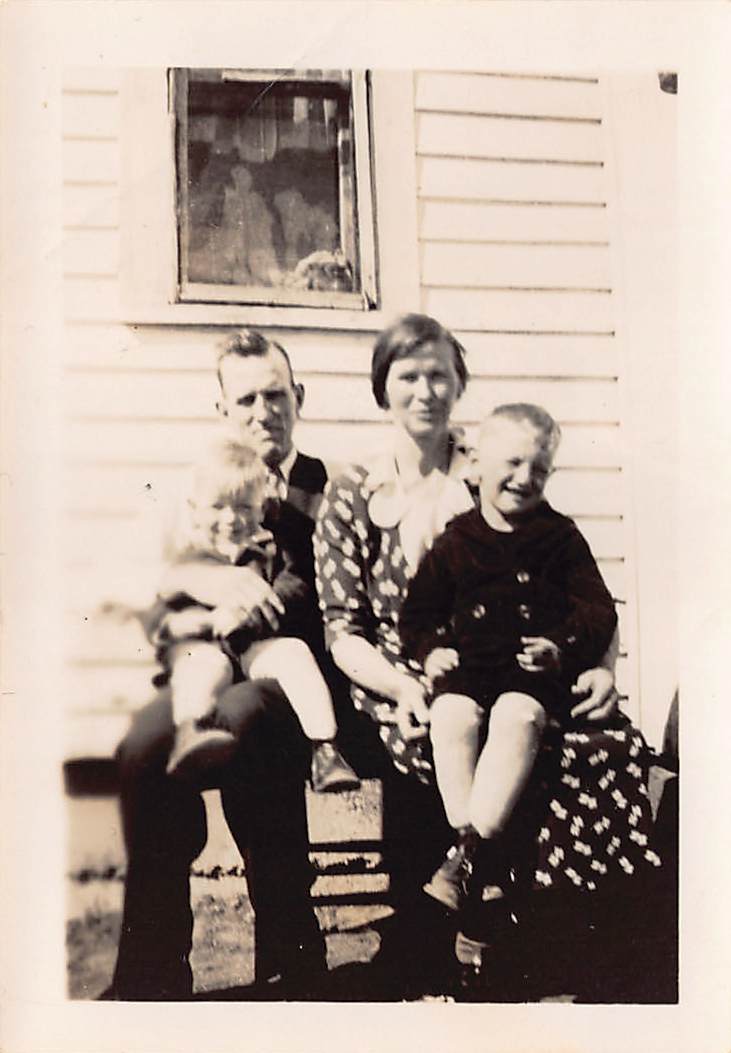
My dad, Loren, was a clergyman. He was a big man, measuring in at six foot three inches. He was wound tight like a drum, but he was also a kind, sincere soul. He served as the pastor in several small town churches, mostly in Michigan. Midway through life, he left full-time ministry and became a clinical psychologist. It was his destiny to go back to school and try and make sense of his pain. No human is exempt from pain, and my dad experienced more than his fair share. Like all identities, his roots were planted, or in his case, abruptly uprooted, early in life.

My dad’s father, Ernest, was born in 1897 in eastern Nebraska into a family of Swedish immigrants. There were ten children. He was raised on a farm in Swedeburg, a tiny Swedish community. Ernest was no stranger to pain and suffering. A bad case of scarlet fever at the age of two nearly killed him and severely damaged his hearing. Remarkably, as a young man, despite his hearing loss, he left the farm in Nebraska. He took the train to Chicago, where he studied theology at the Moody Bible Institute. He graduated and became a minister, preaching vigorously in both Swedish and English from sermons written beautifully on onionskin paper with a blue fountain pen. He met the love of his life, June Hadeen, a fellow Swedish American, and the two were married in her family home in Haxtun, Colorado on Thanksgiving Day, 1930. They were dirt poor and often received food, spartan accommodations and sometimes livestock in lieu of wages. Ernest supplemented their meager income by working on farms, planting corn in the spring with a team of horses and harvesting it in the fall.

Ernest and June were very happy by all accounts. They had two boys. Merlin was the oldest. He was followed by my dad, Loren. In December 1936, the family was living in Holdrege, Nebraska. Ernest was the pastor in a small country church. Things suddenly took a turn for the worse. Ernest wrote this in his journal:

At Christmas, 1936, June, who was seven months pregnant, became ill with influenza. The church gave us a goose for Christmas. We were to roast it and take it with us to her sister’s for Christmas. June was able to roast the goose but thought it best to stay home. June didn’t get any better so we called the doctor. She seemed to be getting better and talked of coming home. Then the hospital called and said June was very sick, and that I should come at once. When I arrived at the hospital, she was in a deep coma. I was shocked! I spoke to Dr. Petersen and he said there wasn’t anything they could do. The flu complicated with the pregnancy brought on uremic poisoning. Marie (her sister) came to the hospital to be with me. We waited and hoped for the better, but she kept sinking. As we stood by her bedside, her life was ebbing away. I leaned over and kissed her a heart rending farewell – she took her last breath and was gone. She must have taken a part of me with her because I have never been the same again. I mourned as I never have. Six happy years together ended – our love for each other was deep. We had toiled together, prayed together, ministered together, hoped together. Suddenly, our home, our church was in the throes of overwhelming sorrow. My dear wife and mother of our two little boys: five and three, had gone home to be with Jesus, far better, we know. But oh, how much we missed her! Not much over a month earlier, June said to me one day: “Ernest if anything happens to me, get someone who will be good to the boys.” Could she have had a premonition?

After the funeral, I left on a trip to visit relatives. Coming back, I began thinking about the future. The church hoped I would stay, but the situation was one I didn’t feel I could handle. I was very sad, and I missed June so much. The Children’s Home at Holdrege offered to keep the boys. I decided to spend the summer with sister Esther and family in Wyoming and work on the ranch. It was hard leaving my two little boys. . . .

Two weeks after June’s funeral, at the very moment Merlin and Loren needed their dad the most, he dropped them off at the Christian Orphans’ Home in Holdrege and drove off in his Ford all alone.

One of Ernest’s sisters, Anna, of Powell, Wyoming, wrote to Ernest on January 6, 1937, just a few days after June died:

June was as dear to me as a sister and her going has left a hunger in my heart, nothing can fill. And those dear little boys. How I wish I could take them in my arms and help them to bear the shock of losing their Angel Mother. Ernest, dear brother, I don’t want to hurt you and I hope you will take this question in the spirit I send it: Would you let little Loren come to us? If not for always, just for awhile until you get adjusted. We would love him so. Please think this over and let me know.

I have not been able to find any evidence that Ernest ever replied to the letter. Anna waited a month and wrote again on on February 7, 1937:

Ernest, I have been thinking a lot. I guess I was selfish to ask for little Loren, he needs you and his little brother even as you need him. I am still selfish enough to want him but – oh, why try to explain things? I think if you could get near someone who could keep an eye on the boys while you were away from home, and you could be with them of evenings (sic) it would be best. Try to raise them right. As a memorial to their Angel mother – never let them forget her.

June’s sister, Marie, later told my dad that she and her husband had seriously considered adopting both of the boys when they heard that they had been left in the orphanage. But, for whatever reason, they did not.

My dad, Loren, later wrote about what happened next:

In the meantime, my father, after spending the summer months with his sister, Esther, in Cody, Wyoming, returned to Nebraska. His sister, Minnie, had lost her husband, and my father was concerned about his sister and her two young children. He decided to move into her home and assist with the farming and care of the family. My brother and I stayed at the Children’s Home from 1937 to 1939.

We will never know for sure what Ernest was thinking when he made the decision to leave Merlin and Loren in Holdrege for two years. His little church wanted him to stay. He could have taken the boys with him when he visited Esther in Wyoming, or later, when he moved in with Minnie and her children on her farm in Nebraska. His sister, Anna, had offered twice to take Loren. Even June’s sister considered adopting the boys. There were several viable alternatives to the orphanage. Based on his later statements to my father, I believe that Ernest simply succumbed to an inner voice that told him that he could not handle the pain of his loss of June and their baby, and that he needed to get as far away from the pain as possible.

By putting his boys in an orphanage and leaving, Ernest actually made things worse. My grandpa was a loving father who was devastated by the loss of his wife and their baby. The actions he took, however, caused unnecessary suffering. He did not – maybe could not – in the midst of his grief, grasp the fundamental truth that the best way to handle pain is to face it head on.

Ernest Anderson and his Ford. He is shown here with his earthly belongings, all alone in Wyoming after leaving his young boys at the Christian Orphans’ Home in Holdrege, Nebraska.

Back in Holdrege, the food was so bad in the orphanage that my father sometimes resorted to putting it in his pockets and burying it outside in the dirt of the playground. Knowing how hungry little boys are, that this even happened is heartbreaking. My father later wrote about his state of mind as a small boy:

I remember strong feelings of loneliness and sadness. I remember sitting in one of the playrooms looking out the window at the moon and wondering when my brother and I would be able to return to be with our father.

While he was away, Ernest slowly glued himself back together. He was introduced to Elfrida Akerson of Maple Plain, Minnesota. After a long period of correspondence and some visits, she agreed to be his wife and care for his boys. Ernest picked up Merlin and Loren and they traveled to Minnesota for the wedding, which took place on New Year’s Day 1939. Then a decision was made that seems uniquely harsh. After the wedding, Ernest and the boys took the train back to Holdrege. Ernest then deposited the boys at the orphanage, where they remained for an additional period of six months. Elfrida stayed in Maple Plain for three months before joining Ernest at his new church in Kansas.

I’d like to think that things are different now, but these kinds of stories happen every day throughout the world, especially in war zones and areas of poverty, and the effect on children is devastating. According to UNICEF (the United Nations Children’s Emergency Fund), there are roughly 153 million orphans worldwide. Every day, an estimated 5,700 more children become orphans. Children are often relinquished due to war, natural disaster, poverty, disease, stigma, and medical needs.

Richard Rohr writes about pain and suffering and its unique legacy:

If we cannot find a way to make our wounds into sacred wounds, we invariably become cynical, negative, or bitter. This is the storyline of many of the greatest novels, myths, and stories of every culture. If we do not transform our pain, we will most assuredly transmit it—usually to those closest to us: our family, our neighbors, our co-workers, and, invariably, the most vulnerable, our children. Richard Rohr. Transforming Pain. October 17, 2018.

My father embarked on a courageous life journey when he left the ministry and went back to school to face his pain. He was on a quest to transform his wounds into sacred wounds. He made great progress and eventually wrote a doctoral thesis on the experience of abandonment.

My father lugged suitcases heavy laden with pain, anxiety and anger (which is hurt) wherever he went in life as a result of his early childhood experience. They were his constant companions. My father always did his best with what he had to offer. I am certain of this. I never doubted that he loved us. Nevertheless, along with plenty of love and kindness, he transmitted a legacy of pain, anxiety and anger to my mom, my sisters and me. If we do not transform our pain, we will most assuredly transmit it.

In 1996, after a brief struggle with cancer, my dad died. He was 62 years old. As he was lying in his bed in the hospital, he suddenly looked up, removed his oxygen mask, and rose from his bed. When a surprised nurse tried to get him to lie back down, he resisted and announced to her, “I have to go. . . God is here to get me.” His heart stopped. The doctors and nurses managed to get it going again. A short while later, we all arrived and gathered around him. After slowly saying “I. . . love. . . all. . . of. . . you” through his oxygen mask, he left us. His quest to transform his pain had finally ended. His wounds were now fully sacred.

About a year ago, I left my life as a partner in a big law firm and became a person applying for long-term disability. I have walked – or more often run – through my fair share of doors in life. But there is something peculiar about walking through the door of retirement at the age of 53 years. This is a one-way experience, much like walking through the tinted glass sliding doors at International Arrivals, where exhausted travelers are released to the outside world. The doors slide open before you and then close behind you and there is no going back. In my case, unless a brilliant surgeon invents a medical procedure that can regrow the millions of dopamine cells that have died and accumulated deep in my brain, I will not be returning to the practice of law. When I switched off the fluorescent lights in my office for the last time, I knew I would not be returning. I removed the magnetized metallic “Timothy Andersson” nameplate from my door, stuffed it into my bag and disappeared.

Life as a retired person is nothing like I experienced before. After graduating from North Park College in Chicago, I spent the better part of my life becoming a lawyer, developing, and then refining my skills in corporate and international law. I spent the vast majority of my waking hours obsessing about my clients and how best to address their legal challenges. I dutifully recorded every six minutes of each hour in one billing system or another.

In a Faustian deal, during seasons of my career I willingly traded my soul in exchange for the big law partner lifestyle, which nearly cost me my marriage, my family and my sanity. At times, in fact, I was very much insane, and I’ve got the therapy bills to prove it. I am not alone in my insanity. Eckhart Tolle writes:

The collective manifestations of the insanity that lies at the heart of the human condition constitute the greater part of human history. It is to a large extent a history of madness. If the history of humanity were the clinical case history of a single human being, the diagnosis would have to be: chronic paranoid delusions, a pathological propensity to commit murder and acts of extreme violence and cruelty against his perceived “enemies” – his own unconsciousness projected outward. Criminally insane, with a few brief lucid intervals. Fear, greed, and the desire for power are the psychological motivating forces not only behind warfare and violence between nations, tribes, religions, and ideologies, but also the cause of incessant conflict in personal relationships. They bring about a distortion in your perception of other people and yourself. Through them, you misinterpret every situation, leading to misguided action designed to rid you of fear and satisfy your need for more, a bottomless hole that can never be filled. Tolle, Eckhart. A New Earth: Awakening to Your Life’s Purpose (pp. 27-28).

My career as a corporate lawyer had come to a screeching halt. Suddenly, I was billing zero hours and had no calls to make or agreements to draft. Life couldn’t be more different than it was before. In this blog I intend to share stories from my life, with its innumerable ups and downs, mountaintops, delusions and moments of clarity. I will sometimes share my experience as a person with Parkinson Disease, a degenerative brain disorder for which there is no cure. Parkinson disease does not define me, but it has taught me a few lessons and given me more than a few things to ponder. More often than not, I will simply share my observations as a man beginning the second half of his life.

I have been doing a lot of reading since I stopped working. At this pivotal time, I am searching for meaning and context for my life. One of my favorite authors is Richard Rohr. In his book, Falling Upward, he writes: “the first half of life is discovering the script, and the second half is actually writing it and owning it.” He explains: “It was Carl Jung who first popularized the phrase “the two halves of life” to describe these two major tangents and tasks, yet many other teachers have recognized that there are clear stages and steps of human and spiritual maturation. Process language is not new; it has just used different images.” Rohr, Richard. AARP Falling Upward (p. 8). Wiley. Kindle Edition.

Since retiring from the practice of law in May 2019, the signs are unmistakable: I have embarked on my second half of my life journey – my second mountain.

Next Tuesday I will post to this blog on the following topic: Pain is necessary. Suffering is optional.