

“Careful the things you say, children will listen, careful the things you do, children will see, and learn.” – Stephen Sondheim
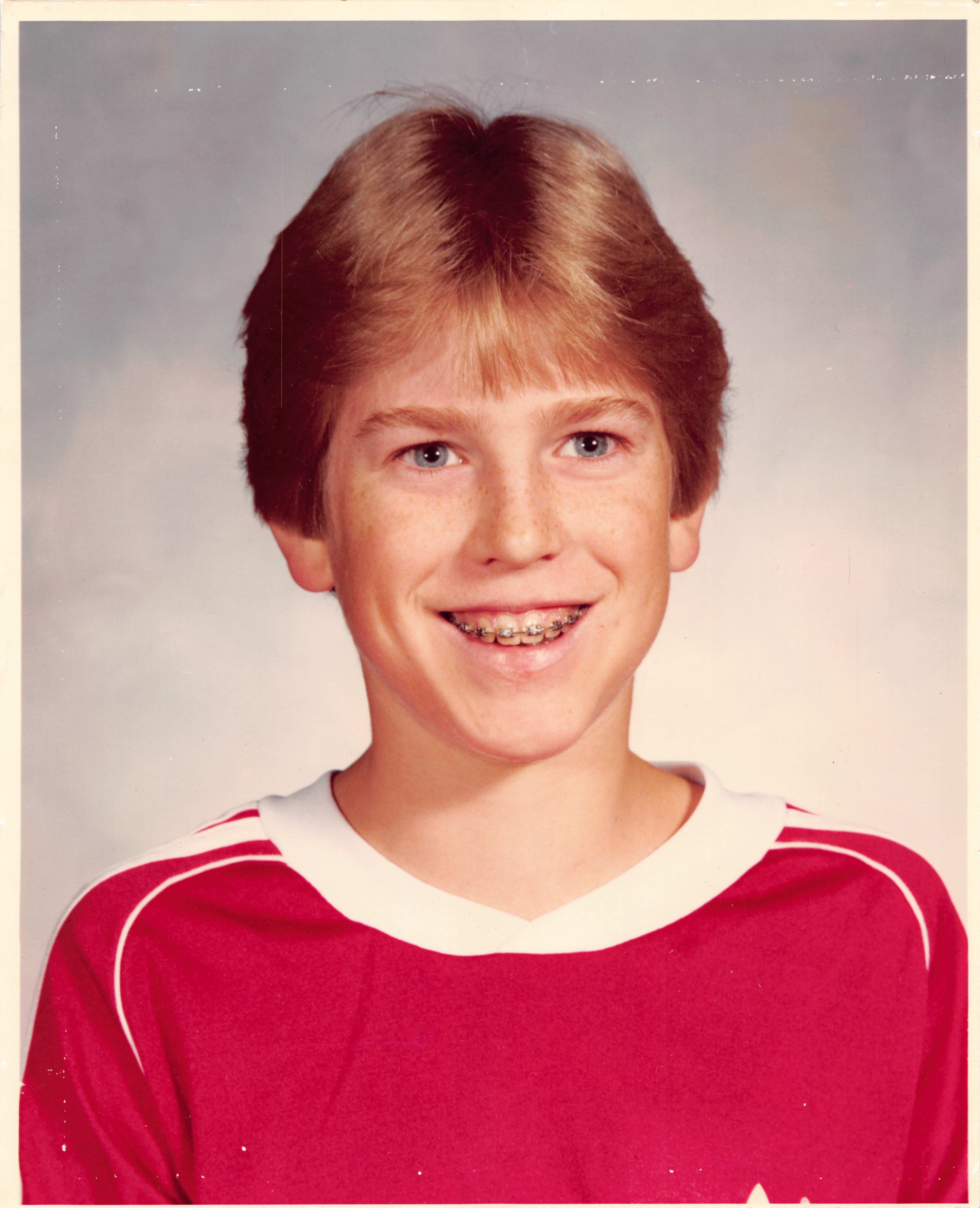
When I was a freshman in high school, I took a class in Algebra. When I asked my mom for some help with my homework, she sat me down and told me, “I was not good at math. You will not be good at it either.” Not surprisingly, I performed as my mom had predicted.
In the beginning of my sophomore year, my best friend, Jim, and I discovered, that if we stood in front of a local liquor store long enough with a five dollar bill, eventually some unscrupulous stranger would buy us a bottle of Boone’s Farm. My favorite was Strawberry Hill. This fine aperitif was featured in a hilarious TV ad featuring a motorcycle-riding granny. Walmart evidently still sells Strawberry Hill, though the recipe is now different.
In my sophomore year, I also signed up for Geometry with Mr. Larson. He had good intentions, but some of his methods at motivating kids were decidedly old school. Teasing and shaming were not off the table in Mr. Larson’s instructional bag of tricks.
On the first day of Geometry, Mr. Larson announced to us that he was going to treat us all as adults. He would require homework to be done every night, but we didn’t need to turn it in until Friday. One look around the classroom made it obvious that this was a huge mistake for some of us. In my brain I immediately translated his instructions to: “Hooray! No homework, except on Thursday evenings!” Once again, I performed as my mom had predicted.
As a 15-year old, prepubescent boy with an enormous chip on my shoulder, I found Strawberry Hill to be way more interesting than the the Pythagorean theorem. By this time, I had already internalized my mom’s statement about math and considered my future in science and technology to be hopeless. I believed – wrongly as it turns out – that I just wasn’t smart in that way.
As a 15-year old boy with a fondness for Boone’s Farm, my continuing membership in Boy Scout Troop 288 in Livonia, Michigan, didn’t stand a chance. I had loved Boy Scouts, but I dropped out in my sophomore year, having achieved the rank of Life Scout. My parents didn’t say much when I announced my decision. I don’t recall getting any encouragement to stay the course. In my own underdeveloped mind, I told myself: “What good is an Eagle badge, when there are so many different flavors of Boone’s Farm to try, not to mention Peppermint Schnapps, Southern Comfort, Michelob, Mickey’s, Bacardi Rum and who knows what else?” Alcohol offered what I believed to be a quick and effective escape from my performance anxiety at school and in life.
My parents took a laissez-faire approach to parenting. They shrugged their shoulders and must have told themselves that I would soon be on to bigger and better things of my own enlightened choosing. Indeed, the customary approach in my household with respect to any problem or transgression was to not say anything at all. Conflict was never resolved. If the car engine is making a strange sound, all you need to do is turn up the radio. Problem solved!
One fall afternoon in Geometry class, Mr. Larson called on me to solve a math problem that required me to calculate the number that is 50% of 150. By this time in my life, I had already internalized what my mom told me about my math handicap. I froze. I’m certain that if Mr. Larson had asked me to state my full name and birthdate, I would have stared blankly at him, unable to speak. To this day I have an incredibly clear memory of the entire class laughing at me and Mr. Larson shaking his head and asking incredulously: “Tim, you have a dollar fifty in your hand. How many quarters would you need to give me so that I would have half of them?” I didn’t have a clue because my brain had already shut down. It was a fight or flight situation and my brain responded accordingly.
Mr. Larson also coached the swim team. I swam with the team during my freshman year. I was, by far, the slowest swimmer on the team. In my defense, I was still in a boy’s body competing against more capable young men. I was assigned to swim the 500-free, which is 20 lengths of freestyle swimming in a 25 yard pool. My technique was adequate, but my pace was excruciatingly slow. I felt horrible finishing the race all on my own, climbing out of the pool to see all of my teammates already sitting on the bench and all of the adults looking down on me from the bleachers. Competitive swimming was added to my internal list of failures. Of course, I didn’t tell anyone about my insecurities. I tried to cover and not care. Not surprisingly, my first year on the swim team was also my last year on the swim team. I replaced the void by swimming in Strawberry Hill.
Shame is powerful. It has been referred to as the “master emotion.”
What is Shame?
Shame is the intensely painful feeling or experience of believing that we are flawed and therefore unworthy of love, belonging, and connection. Brene Brown. Dare to Lead: Brave Work. Tough Conversations. Whole Hearts (Kindle edition p. 122).
According to Brown:
- Shame is universal and one of the most primitive human emotions that we experience. The only people who don’t experience shame are those who lack the capacity for empathy and human connection.
- We’re all afraid to talk about shame. Just the word is uncomfortable.
- The less we talk about shame, the more control it has over our lives. Bad things grow in the dark.
(Brown, p. 127). Signs of shame in an organization or family include:
- Perfectionism
- Favoritism
- Gossiping
- Back-channeling
- Comparison
- Self-worth tied to productivity
- Harassment
- Discrimination
- Power over
- Bullying
- Blaming
- Teasing (e.g. nicknames)
- Cover-ups
(Brown, p. 127). Signs of shame in a person include:
- feelings of low self-worth arising from unwanted identity (e.g., sick, unreliable, and undependable)
- addictions
- secrets
- abuse
- violence
- aggression
- depression
- eating disorders
- unethical behavior
- entitlement
- self-aggrandizement
- victim mentality
- suicide
(Brown, p. 127)
Guilt, Humiliation and Embarrassment
Guilt, humiliation and embarrassment are not shame, though they are perhaps close cousins of shame.
Guilt
- is a feeling that I did something bad. Shame, on the other hand, is a feeling that I am something bad.
- is a powerful and socially adaptive emotion. When we apologize for something we’ve done, make amends, or change a behavior that doesn’t align with our values, guilt (not shame) is most often the driving force.
- is a psychologically uncomfortable feeling, but one that’s helpful. The discomfort of cognitive dissonance is what drives meaningful change. Shame, however, corrodes the very part of us that believes we can change and do better.
- is negatively correlated with the outward signs of shame.
Humiliation
- is a word that we often confuse with shame.
- is less destructive than shame. People do not believe that they deserve to be humiliated.
- feels terrible and makes for a miserable work or home environment.
- can lead to shame if we start to buy into the humiliating messaging.
Embarrassment
- is normally fleeting.
- can usually eventually be funny.
- does not make us feel alone.
If I could enter a time machine now, here are some things I would like to say, breaking through my shame in the year 1981:
To my mom and dad: ”Would you guys be willing to give me some advice here? I am just a kid and I don’t have a clue about whether it would be a good idea for me to drop out of Boy Scouts and quit the swim team.”
To my mom and dad: ”I am feeling very anxious about my life. I feel like you have huge expectations of me, and yet I don’t feel free to talk about my problems with you because we never talk about problems like this in any constructive way. Can we be real for a change? I could really use some help from you. I’m just a kid.”
To the stranger in front of the liquor store: “Please don’t take our money and buy us Strawberry Hill. We are not old enough to drink, it is not right for you to supply us with alcohol and I can assure you we have no idea how to drink responsibly.”
To Mr. Larson: “Would it be ok with you if I turn in my homework each day to you? I don’t have enough confidence in myself, with all that is going on in my life, to do my homework every day without someone to keep me accountable. Plus, I am nervous about geometry because my mom told me that I am not very good at math.”
To Mr. Larson: “Would you please not laugh and poke fun of me? I am super embarrassed by this situation and I am finding it impossible to think straight with all that is happening right now in this classroom.”
To myself: “Tim, give yourself some credit here. It is a very brave thing for you to keep swimming after everyone else has finished. When you get your growth spurt, you will be able to compete with these other swimmers. Don’t worry about your speed right now. Just focus on being the best swimmer that you are able to be. Take the long view. Your time will come, and you will be amazed at how fast you will be able to swim the 500-free.”
Some things really need to be said out loud to stop the shame. Children will listen.
Discover more from Real Life Matters
Subscribe to get the latest posts sent to your email.