

“I think America must see that riots do not develop out of thin air. Certain conditions continue to exist in our society which must be condemned as vigorously as we condemn riots. But in the final analysis, a riot is the language of the unheard. And what is it that America has failed to hear? It has failed to hear that the plight of the Negro poor has worsened over the last few years. It has failed to hear that the promises of freedom and justice have not been met. And it has failed to hear that large segments of white society are more concerned about tranquility and the status quo than about justice, equality, and humanity. And so in a real sense our nation’s summers of riots are caused by our nation’s winters of delay. And as long as America postpones justice, we stand in the position of having these recurrences of violence and riots over and over again. Social justice and progress are the absolute guarantors of riot prevention.” – Martin Luther King, Jr.
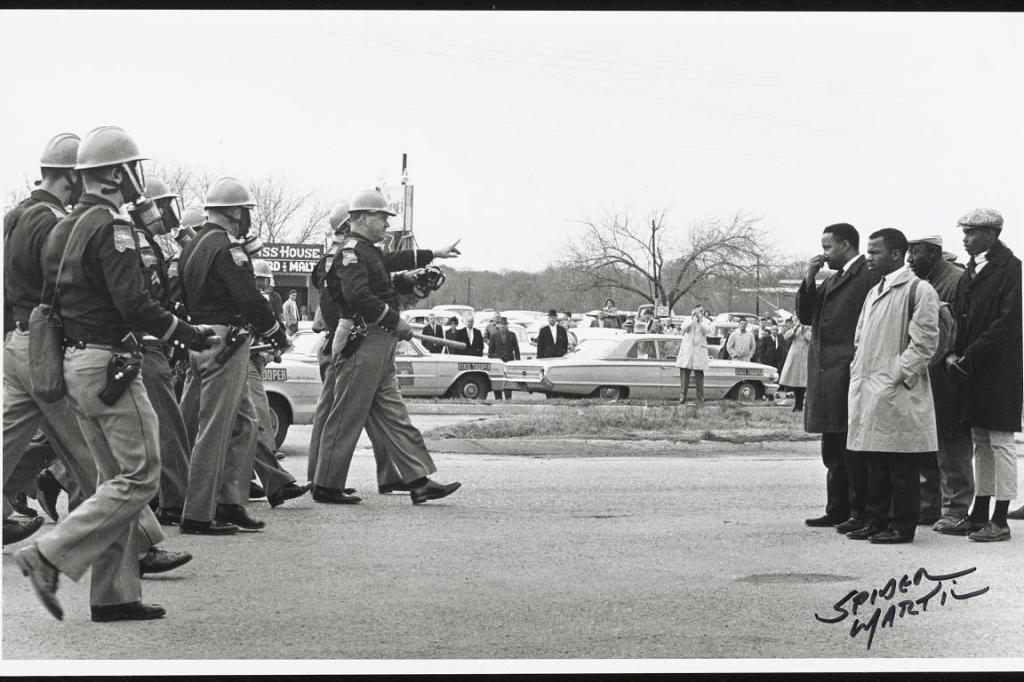
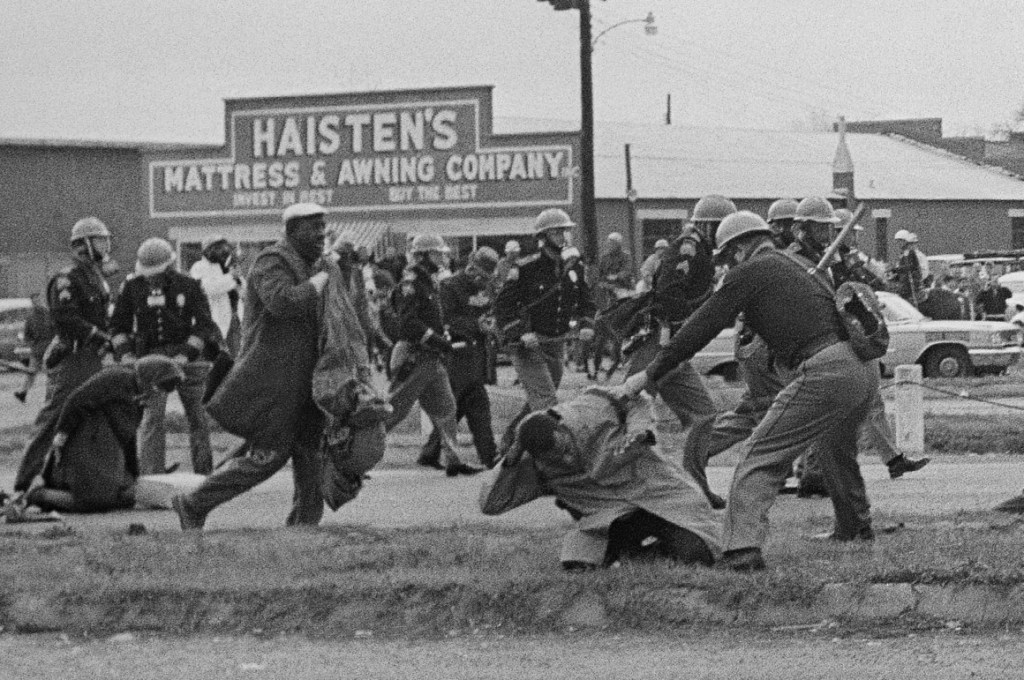

Today our country feels like it is ripping apart at the seams. Demonstrations against police brutality continue. This moment is reminiscent of the 1960s, with all its racial animosity, historic marches and police aggression against nonviolent demonstrations.
Today it’s as if Bull Connor and George Wallace have been brought back from the dead. Only this time, fire hoses and police dogs have been replaced by armored Humvees, low-flying Blackhawk helicopters, flash-bang grenades, rubber bullets, tasers, pepper balls and tear gas. Batons, shields and coordinated, aggressive police tactics remain unchanged.
A few weeks after the death of George Floyd, there are some signs that violence both on the part of the police and demonstrators is giving way toward a more peaceful and increasingly powerful demand to end racial injustice in America. It has been a long time in the making. Black Lives Matter, as a movement, has opened my eyes to how deep and pervasive racism has been and continues to be in this country. I knew things were bad, but I did not really grasp how difficult life is, every day, for people of color.
The American Civil War ended 155 years ago. The war was fought to settle the question of slavery (which is the most extreme form of racism) once and for all. After the war ended, it did not take long for white Americans to fight back – and fight back they did with devastating effect. Abraham Lincoln was assassinated by John Wilkes Booth on April 15, 1865. Vice President Andrew Johnson, a former slaveowner from Tennessee, ascended to the presidency. He did everything he could to turn back the clock. He was the first President to be impeached by Congress because of his efforts to impede racial justice in the South by removing President Lincoln’s Secretary of War. A description of his presidency seems like it could appear as an editorial opinion in the New York Times today:
For the most part, historians view Andrew Johnson as the worst possible person to have served as President at the end of the American Civil War. Because of his gross incompetence in federal office and his incredible miscalculation of the extent of public support for his policies, Johnson is judged as a great failure in making a satisfying and just peace. He is viewed to have been a rigid, dictatorial racist who was unable to compromise or to accept a political reality at odds with his own ideas…Most importantly, Johnson’s strong commitment to obstructing political and civil rights for blacks is principally responsible for the failure of Reconstruction to solve the race problem in the South and perhaps in America as well. Varon, Elizabeth R. “Andrew Johnson: Impact and Legacy”. Miller Center. University of Virginia.
Congress, led by the Republican party, fought back against Johnson. The Reconstruction Act of 1867, which was passed despite a veto by Johnson, gave newly enfranchised Blacks a voice in government for the first time in American history. They won election to southern state legislatures and even to Congress. Sadly, “in less than a decade, reactionary forces, including the Klu Klux Klan, would reverse the changes wrought by the Reconstruction Act in a violent backlash that restored white supremacy in the South.”
The Klan was formed by six Confederate veterans from Pulaski, Tennessee on Christmas Eve in 1865.
Historians generally classify the KKK as part of the post-Civil War insurgent violence related not only to the high number of veterans in the population, but also to their effort to control the dramatically changed social situation by using extrajudicial means to restore white supremacy. In 1866, Mississippi Governor William L. Sharkey reported that disorder, lack of control, and lawlessness were widespread; in some states armed bands of Confederate soldiers roamed at will. The Klan used public violence against black people and their allies as intimidation. They burned houses and attacked and killed black people, leaving their bodies on the roads. Klu Klux Klan, Wikipedia.
Criminal prosecution of the Klan, led by President Ulysses S. Grant under the Enforcement Act of 1871, managed to suppress the Klan. Unfortunately, this was not the end of the line for the Klan. The release of the violent and disturbing motion picture, “Birth of a Nation” in 1915, sparked its revival. Members mimicked the movie, wearing terrifying, anonymous white robes with pointed hoods and riding on robed horses. President Woodrow Wilson, a native of Virginia, had a private screening of Birth of a Nation in the White House. After the screening, Wilson issued a public statement stating that he had been “unaware of the character of the play before it was presented and has at no time expressed his approbation of it. Its exhibition at the White House was a courtesy extended to an old acquaintance.” In private, Wilson is believed by most historians to have more accurately opined that Birth of a Nation was like “writing history with lightning.”
Woodrow Wilson’s record on race relations was not very good. African Americans welcomed his election in 1912, but they were worried too. During his first term in office, the House passed a law making racial intermarriage a felony in the District of Columbia. His new Postmaster General also ordered that his Washington offices be segregated, with the Treasury and Navy soon doing the same. Suddenly, photographs were required of all applicants for federal jobs. When pressed by black leaders, Wilson replied, “The purpose of these measures was to reduce the friction. It is as far as possible from being a movement against the Negroes. I sincerely believe it to be in their interest.” Woodrow Wilson and Race in America.
Over time, the Klan faded, but like a cancer in our land, it reemerged in the 1950s and 1960s during the civil rights movement and era of desegregation. The Klan forged alliances with Southern police departments, as in Birmingham, Alabama; and with governor’s offices, including the notorious George Wallace of Alabama. The Klu Klux Klan.
The history of the Klan shows that the notion of white supremacy has deep roots in American culture. It goes way beyond hate groups. The American legal system has enforced and even promoted white supremacy in subtle and not-so-subtle ways for centuries. After the Civil War, Black Codes were enacted, restricting the ability of freed slaves to work and in some cases perpetuating slavery for all practical purposes. These codes were eventually replaced by Jim Crow laws. Separate but equal treatment for Blacks (i.e., segregation) remained enforceable as the highest law of the land until it was overturned by the U.S. Supreme Court in 1954. When two Black students exercised their rights to register as students of the University of Alabama in 1963, President Kennedy federalized the Alabama National Guard to confront Governor George Wallace. Brigadier General Henry Graham of the Alabama National Guard approached with his troops. He first saluted Governor Wallace and then said, “Sir, it is my sad duty to ask you to step aside under the orders of the President of the United States.” After a few incredibly tense moments, Wallace stepped aside and Vivian Malone, together with James Hood, entered the University to complete their registration. In the days following the incident, the National Guard were ordered to remain on the campus owing to a large Klan contingent in the surrounding area. Stand in the Schoolhouse Door.
Sadly, despite its sordid history, the Klan has regained prominence, beginning in 2016 with the election of Donald Trump as President. During his campaign, Trump was endorsed by David Duke, the former Grand Wizard of the Klan, who proclaimed upon Trump’s victory in 2016: “This is one of the most exciting nights of my life -> make no mistake about it, our people have played a HUGE role in electing Trump! #MAGA.”
In August 2017, hundreds of far-right extremists descended on Charlottesville, Virginia, ostensibly to protest the removal of a Confederate statue from a local park. Dubbed “Unite the Right,” the gathering was the largest and most violent public assembly of white supremacists in decades. It evidenced a resurgent and emboldened white supremacist movement. ADL Blog. 600 white supremacists representing 39 states attended the event. In his controversial response to the violence in Charlottesville (which included a car speeding down a street filled with peaceful counter protestors, killing one and injuring 19), President Trump famously said that there were “very fine people on both sides” of the demonstration.
In the world of criminal justice, a pernicious and extremely effective form of white supremacy in the United States began to take shape in the 1970s. In 1971, President Nixon declared “drug abuse” to be public enemy number one. His “War on Drugs” largely remains on the books to this day. During its 49 years of reign, the War on Drugs has had a devastating effect on people of color. According to Nixon’s White House counsel, John Ehrlichman:
The Nixon campaign in 1968, and the Nixon White House after that, had two enemies: the antiwar left and black people. You understand what I’m saying? We knew we couldn’t make it illegal to be either against the war or Black, but by getting the public to associate the hippies with marijuana and blacks with heroin, and then criminalizing both heavily, we could disrupt those communities. We could arrest their leaders, raid their homes, break up their meetings, and vilify them night after night on the evening news. Did we know we were lying about the drugs? Of course we did. John Ehrlichman, to Dan Baum for Harper’s Magazine in 1994.
The War on Drugs escalated with the passage of the Sentencing Reform Act of 1984 and the Anti-Drug Abuse Act of 1986, which revised federal drug laws to carry very long maximum sentences – up to 40 years for some quantities, and up to life imprisonment for somewhat larger quantities. Suddenly, the amount of people incarcerated the United States surged. This surge continued in the 1990s, with no broken windows policing in New York under Mayor Rudy Giuliani, which eventually morphed into “stop and frisk” policing in New York under Mayor Michael Bloomberg. The collective effect of these laws and policing tactics over time has been mass incarceration, especially of Black Americans.
Despite making up close to 5% of the global population, the U.S. has nearly 25% of the world’s prison population. Since 1970, our incarcerated population has increased by 700% – 2.3 million people in jail and prison today, far outpacing population growth and crime.
One out of every three Black boys born today can expect to go to prison in his lifetime, as can one of every six Latino boys—compared to one of every 17 white boys. ACLU “Mass Incarceration.

These statistics are appalling. And they make it easier to see how the system has been seemingly designed to keep black Americans from rising out of poverty, while at the same time instilling in them a rational fear of the police. Slavery was ended over 150 years ago, but the bondage of African Americans never really went away – it just evolved into a new form.
Aggressive policing tactics and racism have accelerated under the combustible presidency of Donald Trump. In 2017, he told a crowd of police officers at a campaign rally “please don’t be too nice” when arresting people, encouraging them to deliberately not protect the heads of people being arrested and placed into the back of a police cruiser. Then things got even more extreme:
On January 11, 2018, during an Oval Office talk with several U.S. senators about protecting immigrants from Haiti, El Salvador, and African countries in a new immigration package, President Donald Trump unleashed a word that Americans aren’t accustomed to hearing from their president. “Why are we having all these people from shithole countries come here?” Trump reportedly asked. (He later denied having said this.) Months earlier, Trump had reportedly complained that Nigerian immigrants would never “go back to their huts” and Haitians “all have aids.” He doubled down at the Oval Office meeting. “Why do we need more Haitians?” Trump said. “Take them out.” In their stead, Trump spoke of taking in immigrants from great European countries like Norway, and also from Asian countries, since they could help America economically. The Day Shithole Entered the Presidential Lexicon.
More recently the President tweeted in response to Black Lives Matter demonstrations, “when the looting starts the shooting starts,” prompting a first-ever warning by Twitter, which stated that the Tweet, and an identical Tweet from the White House Twitter account, “violated the Twitter Rules about glorifying violence.”
It is against this backdrop racial animosity that the names Trayvon Martin, Tamir Rice, Michael Brown, Eric Garner, Philando Castile, Breonna Taylor, Ahmed Aubrey, and George Floyd, plus so many others, come into sharp focus. The history of our country is a history of persistent and pervasive racism on both an individual and collective level.
Vladimir Lenin said about history, “there are decades where nothing happens, and there are weeks where decades happen.” Could we be at a turning point?
Discover more from Real Life Matters
Subscribe to get the latest posts sent to your email.