

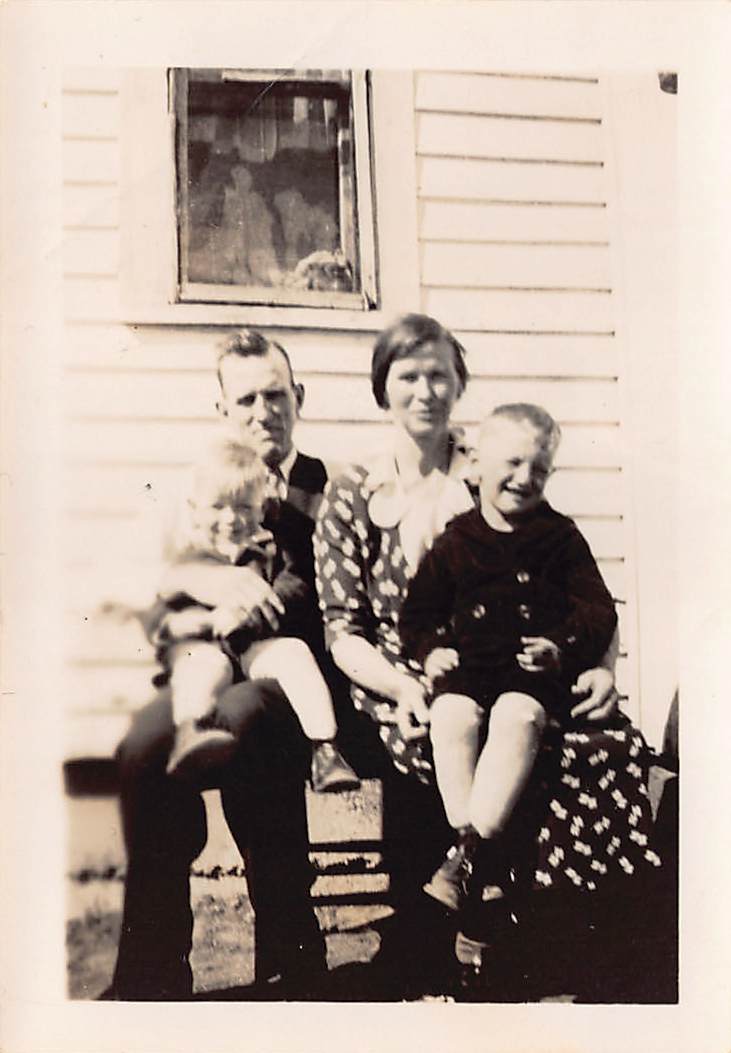
David Kessler is one of the world’s leading experts on grief and loss. He co-authored On Grief and Grieving with Elisabeth Kübler-Ross, the seminal treatise on grief. Together they formulated what have been widely accepted as the five stages of grief:
- Denial: shock and disbelief that the loss has occurred
- Anger: that someone we love is no longer here
- Bargaining: all the what-ifs and regrets
- Depression: sadness from the loss
- Acceptance: acknowledging the reality of the loss
In 2019, Kessler proposed that the process of grief actually involves an additional, sixth stage. In his book, Finding Meaning: The Sixth Stage of Grief, he explains that we need to allow ourselves to move fully into the crucial and profound stage of meaning that “will allow us to transform grief into something else, something rich and fulfilling. The pain never goes away, but healing can only be found in finding meaning in the loss.” Kessler, David. Finding Meaning: The Sixth Stage of Grief (p. 2). Scribner. Kindle Edition.
In his book, Kessler explains that there is a key difference between what he calls pain and suffering:
I often teach that in grief, pain is inevitable, but suffering is optional. In my lectures, I make that distinction because most of us think of them as interchangeable. They are not. Pain is the pure emotion we feel when someone we love dies. The pain is part of the love. Suffering is the noise our mind makes around that loss, the false stories it tells because it can’t conceive of death as random. Kessler, David. Finding Meaning: The Sixth Stage of Grief (p. 51). Scribner. Kindle Edition.
My dad, Loren, was a clergyman. He was a big man, measuring in at six foot three inches. He was wound tight like a drum, but he was also a kind, sincere soul. He served as the pastor in several small town churches, mostly in Michigan. Midway through life, he left full-time ministry and became a clinical psychologist. It was his destiny to go back to school and try and make sense of his pain. No human is exempt from pain, and my dad experienced more than his fair share. Like all identities, his roots were planted, or in his case, abruptly uprooted, early in life.
My dad’s father, Ernest, was born in 1897 in eastern Nebraska into a family of Swedish immigrants. There were ten children. He was raised on a farm in Swedeburg, a tiny Swedish community. Ernest was no stranger to pain and suffering. A bad case of scarlet fever at the age of two nearly killed him and severely damaged his hearing. Remarkably, as a young man, despite his hearing loss, he left the farm in Nebraska. He took the train to Chicago, where he studied theology at the Moody Bible Institute. He graduated and became a minister, preaching vigorously in both Swedish and English from sermons written beautifully on onionskin paper with a blue fountain pen. He met the love of his life, June Hadeen, a fellow Swedish American, and the two were married in her family home in Haxtun, Colorado on Thanksgiving Day, 1930. They were dirt poor and often received food, spartan accommodations and sometimes livestock in lieu of wages. Ernest supplemented their meager income by working on farms, planting corn in the spring with a team of horses and harvesting it in the fall.
Ernest and June were very happy by all accounts. They had two boys. Merlin was the oldest. He was followed by my dad, Loren. In December 1936, the family was living in Holdrege, Nebraska. Ernest was the pastor in a small country church. Things suddenly took a turn for the worse. Ernest wrote this in his journal:
At Christmas, 1936, June, who was seven months pregnant, became ill with influenza. The church gave us a goose for Christmas. We were to roast it and take it with us to her sister’s for Christmas. June was able to roast the goose but thought it best to stay home. June didn’t get any better so we called the doctor. She seemed to be getting better and talked of coming home. Then the hospital called and said June was very sick, and that I should come at once. When I arrived at the hospital, she was in a deep coma. I was shocked! I spoke to Dr. Petersen and he said there wasn’t anything they could do. The flu complicated with the pregnancy brought on uremic poisoning. Marie (her sister) came to the hospital to be with me. We waited and hoped for the better, but she kept sinking. As we stood by her bedside, her life was ebbing away. I leaned over and kissed her a heart rending farewell – she took her last breath and was gone. She must have taken a part of me with her because I have never been the same again. I mourned as I never have. Six happy years together ended – our love for each other was deep. We had toiled together, prayed together, ministered together, hoped together. Suddenly, our home, our church was in the throes of overwhelming sorrow. My dear wife and mother of our two little boys: five and three, had gone home to be with Jesus, far better, we know. But oh, how much we missed her! Not much over a month earlier, June said to me one day: “Ernest if anything happens to me, get someone who will be good to the boys.” Could she have had a premonition?
After the funeral, I left on a trip to visit relatives. Coming back, I began thinking about the future. The church hoped I would stay, but the situation was one I didn’t feel I could handle. I was very sad, and I missed June so much. The Children’s Home at Holdrege offered to keep the boys. I decided to spend the summer with sister Esther and family in Wyoming and work on the ranch. It was hard leaving my two little boys. . . .
Two weeks after June’s funeral, at the very moment Merlin and Loren needed their dad the most, he dropped them off at the Christian Orphans’ Home in Holdrege and drove off in his Ford all alone.
One of Ernest’s sisters, Anna, of Powell, Wyoming, wrote to Ernest on January 6, 1937, just a few days after June died:
June was as dear to me as a sister and her going has left a hunger in my heart, nothing can fill. And those dear little boys. How I wish I could take them in my arms and help them to bear the shock of losing their Angel Mother. Ernest, dear brother, I don’t want to hurt you and I hope you will take this question in the spirit I send it: Would you let little Loren come to us? If not for always, just for awhile until you get adjusted. We would love him so. Please think this over and let me know.
I have not been able to find any evidence that Ernest ever replied to the letter. Anna waited a month and wrote again on on February 7, 1937:
Ernest, I have been thinking a lot. I guess I was selfish to ask for little Loren, he needs you and his little brother even as you need him. I am still selfish enough to want him but – oh, why try to explain things? I think if you could get near someone who could keep an eye on the boys while you were away from home, and you could be with them of evenings (sic) it would be best. Try to raise them right. As a memorial to their Angel mother – never let them forget her.
June’s sister, Marie, later told my dad that she and her husband had seriously considered adopting both of the boys when they heard that they had been left in the orphanage. But, for whatever reason, they did not.
My dad, Loren, later wrote about what happened next:
In the meantime, my father, after spending the summer months with his sister, Esther, in Cody, Wyoming, returned to Nebraska. His sister, Minnie, had lost her husband, and my father was concerned about his sister and her two young children. He decided to move into her home and assist with the farming and care of the family. My brother and I stayed at the Children’s Home from 1937 to 1939.
We will never know for sure what Ernest was thinking when he made the decision to leave Merlin and Loren in Holdrege for two years. His little church wanted him to stay. He could have taken the boys with him when he visited Esther in Wyoming, or later, when he moved in with Minnie and her children on her farm in Nebraska. His sister, Anna, had offered twice to take Loren. Even June’s sister considered adopting the boys. There were several viable alternatives to the orphanage. Based on his later statements to my father, I believe that Ernest simply succumbed to an inner voice that told him that he could not handle the pain of his loss of June and their baby, and that he needed to get as far away from the pain as possible.
By putting his boys in an orphanage and leaving, Ernest actually made things worse. My grandpa was a loving father who was devastated by the loss of his wife and their baby. The actions he took, however, caused unnecessary suffering. He did not – maybe could not – in the midst of his grief, grasp the fundamental truth that the best way to handle pain is to face it head on.

Back in Holdrege, the food was so bad in the orphanage that my father sometimes resorted to putting it in his pockets and burying it outside in the dirt of the playground. Knowing how hungry little boys are, that this even happened is heartbreaking. My father later wrote about his state of mind as a small boy:
I remember strong feelings of loneliness and sadness. I remember sitting in one of the playrooms looking out the window at the moon and wondering when my brother and I would be able to return to be with our father.
While he was away, Ernest slowly glued himself back together. He was introduced to Elfrida Akerson of Maple Plain, Minnesota. After a long period of correspondence and some visits, she agreed to be his wife and care for his boys. Ernest picked up Merlin and Loren and they traveled to Minnesota for the wedding, which took place on New Year’s Day 1939. Then a decision was made that seems uniquely harsh. After the wedding, Ernest and the boys took the train back to Holdrege. Ernest then deposited the boys at the orphanage, where they remained for an additional period of six months. Elfrida stayed in Maple Plain for three months before joining Ernest at his new church in Kansas.
I’d like to think that things are different now, but these kinds of stories happen every day throughout the world, especially in war zones and areas of poverty, and the effect on children is devastating. According to UNICEF (the United Nations Children’s Emergency Fund), there are roughly 153 million orphans worldwide. Every day, an estimated 5,700 more children become orphans. Children are often relinquished due to war, natural disaster, poverty, disease, stigma, and medical needs.
Richard Rohr writes about pain and suffering and its unique legacy:
If we cannot find a way to make our wounds into sacred wounds, we invariably become cynical, negative, or bitter. This is the storyline of many of the greatest novels, myths, and stories of every culture. If we do not transform our pain, we will most assuredly transmit it—usually to those closest to us: our family, our neighbors, our co-workers, and, invariably, the most vulnerable, our children. Richard Rohr. Transforming Pain. October 17, 2018.
My father embarked on a courageous life journey when he left the ministry and went back to school to face his pain. He was on a quest to transform his wounds into sacred wounds. He made great progress and eventually wrote a doctoral thesis on the experience of abandonment.
My father lugged suitcases heavy laden with pain, anxiety and anger (which is hurt) wherever he went in life as a result of his early childhood experience. They were his constant companions. My father always did his best with what he had to offer. I am certain of this. I never doubted that he loved us. Nevertheless, along with plenty of love and kindness, he transmitted a legacy of pain, anxiety and anger to my mom, my sisters and me. If we do not transform our pain, we will most assuredly transmit it.
In 1996, after a brief struggle with cancer, my dad died. He was 62 years old. As he was lying in his bed in the hospital, he suddenly looked up, removed his oxygen mask, and rose from his bed. When a surprised nurse tried to get him to lie back down, he resisted and announced to her, “I have to go. . . God is here to get me.” His heart stopped. The doctors and nurses managed to get it going again. A short while later, we all arrived and gathered around him. After slowly saying “I. . . love. . . all. . . of. . . you” through his oxygen mask, he left us. His quest to transform his pain had finally ended. His wounds were now fully sacred.
Discover more from Real Life Matters
Subscribe to get the latest posts sent to your email.