

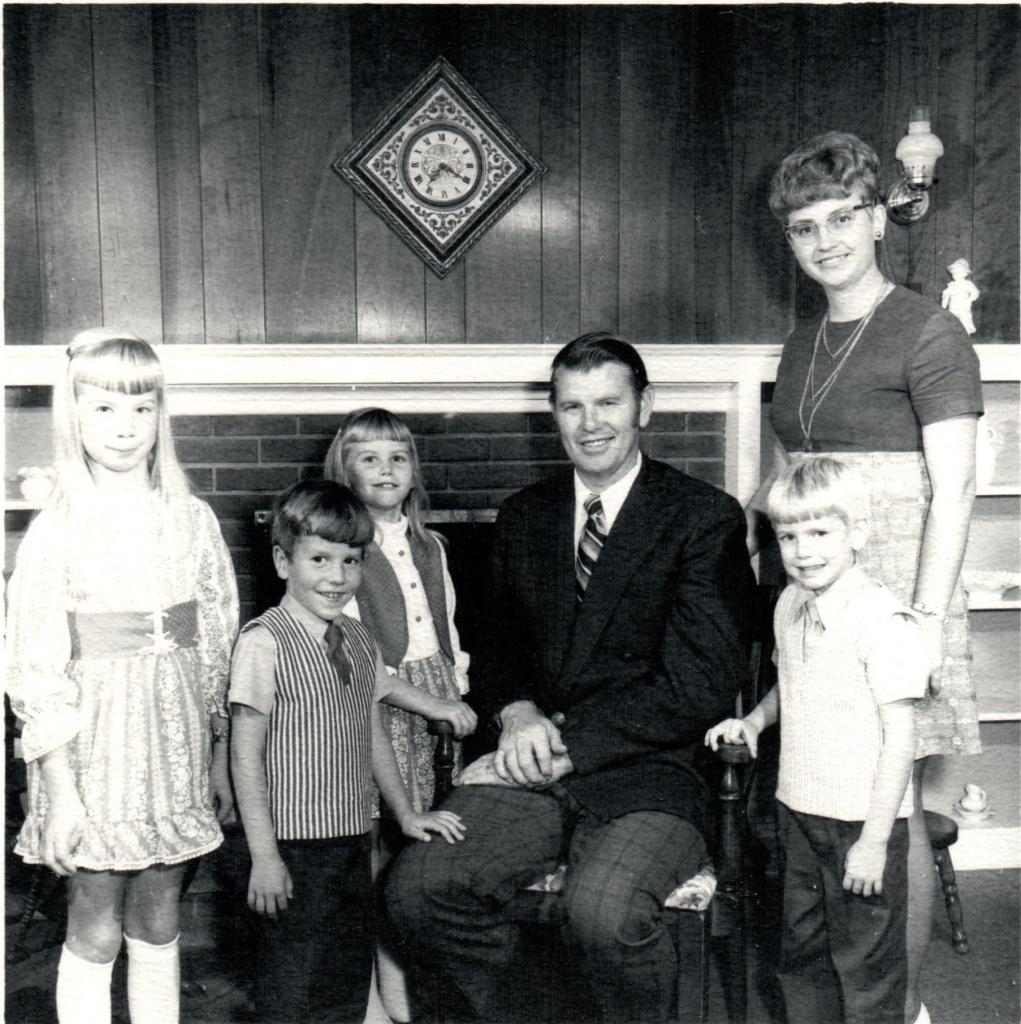
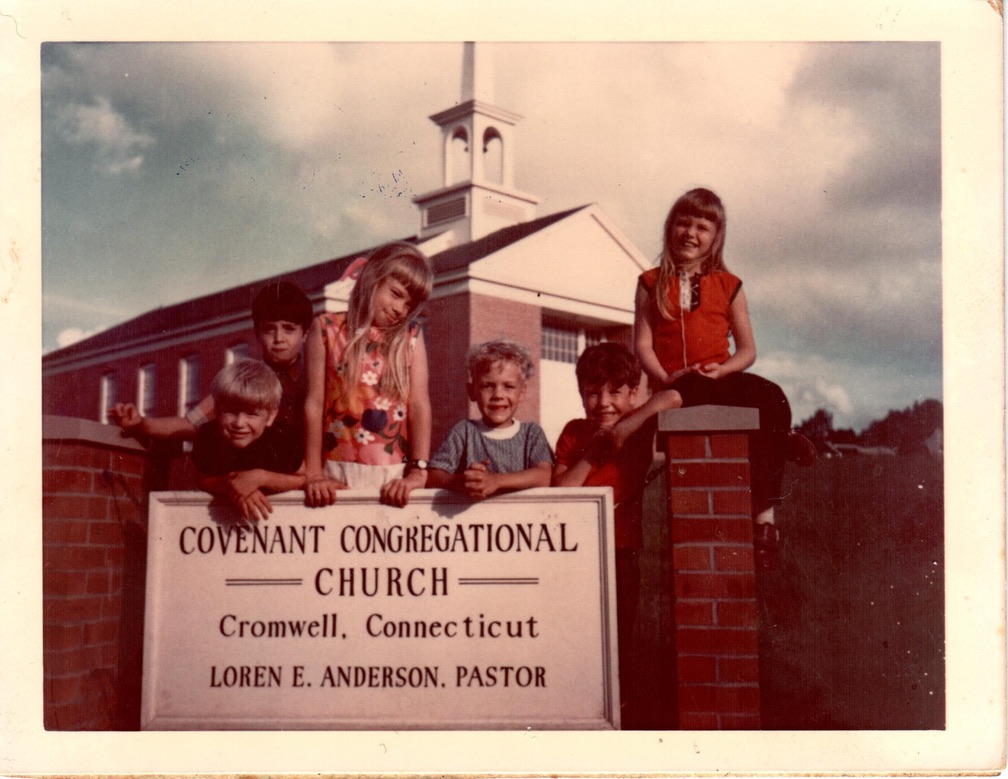
In 1970 our family moved from Michigan’s upper peninsula to Cromwell, Connecticut, where my dad served as pastor of a Covenant Congregational Church. I was four years old when we arrived in Cromwell. Sometime during this formative period things happened that allowed shame to take hold inside of me. One of the incidents contributing to my shame had something to do with being scolded by my dad after wandering into a shed full of tar, which came like a bolt out of the blue. I don’t hold a grudge against my dad, as his experience with shame got passed along to him by his own dad.[1]https://realifematters.com/2020/04/28/pain-is-necessary-suffering-is-optional/
Francis Weller described how the experience of shame is like a high school chemistry class making rock candy:
[T]he experiment involved taking a glass of water, tying a string to a pencil, and placing the string in the water. Then we slowly added sugar to the water, creating a solution. And nothing happens . . . nothing happens . . . and then, when the saturation point is reached, the sugar molecules begin to crystallize around the string. I thought, This is how it is with shame. We can endure a certain number of times when the connection is broken between us and the people we love and need. We can digest a certain volume of disappointments and criticism. But at some point, with enough repetition, the internal stories associated with those events reach their saturation point, and the fictions crystallize into things that feel like truths.[2]Weller, Francis. The Wild Edge of Sorrow: Rituals of Renewal and the Sacred Work of Grief (pp. 33-34). Kindle Edition.
Living with shame is exhausting. Shame forms cracks in your sense of worth, so that the good stuff you receive seeps out almost immediately. Shame tells me that I am not worth anything beyond my current performance. If I fail to perform there is something fundamentally wrong with me.
Shame closes the heart to self-compassion. We live with an internal state best characterized as self-hatred. In order to loosen shame’s grip on our lives, we need to make three moves. The first is from feeling worthless to seeing ourselves as wounded. The second emerges from the first and is a shift from seeing ourselves through the lens of contempt to one of a budding compassion. And the third is moving from silence to sharing. As long as we see our suffering as evidence of worthlessness, we will not move toward our wounds with anything but judgment.[3]Weller, Francis. The Wild Edge of Sorrow: Rituals of Renewal and the Sacred Work of Grief (p. 34). Kindle Edition.
I’m listening to the wind crossing Lake Michigan and the waves crashing onto the beach, seeking a truce in my familiar war with myself. I look at the horizon and watch the sun breaking through the clouds. In this moment I feel grounded and hopeful.
Reaching through time I hug the four-year-old boy startled in the shed with tar sticking to the soles of his little tennis shoes:
“It’s ok, Timmy. Stuff happens when you are on an adventure. Don’t worry about your shoes. They are only shoes! We can get new ones, and maybe a chocolate malt from Friendly’s while we are out.“
References
| ↑1 | https://realifematters.com/2020/04/28/pain-is-necessary-suffering-is-optional/ |
|---|---|
| ↑2 | Weller, Francis. The Wild Edge of Sorrow: Rituals of Renewal and the Sacred Work of Grief (pp. 33-34). Kindle Edition. |
| ↑3 | Weller, Francis. The Wild Edge of Sorrow: Rituals of Renewal and the Sacred Work of Grief (p. 34). Kindle Edition. |
Discover more from Real Life Matters
Subscribe to get the latest posts sent to your email.