

“The deeper the sorrow, the greater the joy.” – William Blake
One of the most adorable things that Malin did as a toddler happened at Christmas. Visiting grandma and grandpa in Nebraska, she removed the tiny wooden Jesus figure from grandma’s nativity scene, rocking it ever so gently in her arms and looking up to Jennifer, saying, “Mamma… Baby Jesus cry.” With her lisp, the “r” sound in the word “cry” was absent, making her observations even more adorable.
Almost all children, especially young children, are able to cry freely. Indeed, healthy infants are born into the world crying. Research also shows that children laugh about 400 times a day, but adults on average laugh only about 15 times.[1]https://www.ncbi.nlm.nih.gov/pmc/articles/PMC6609137/
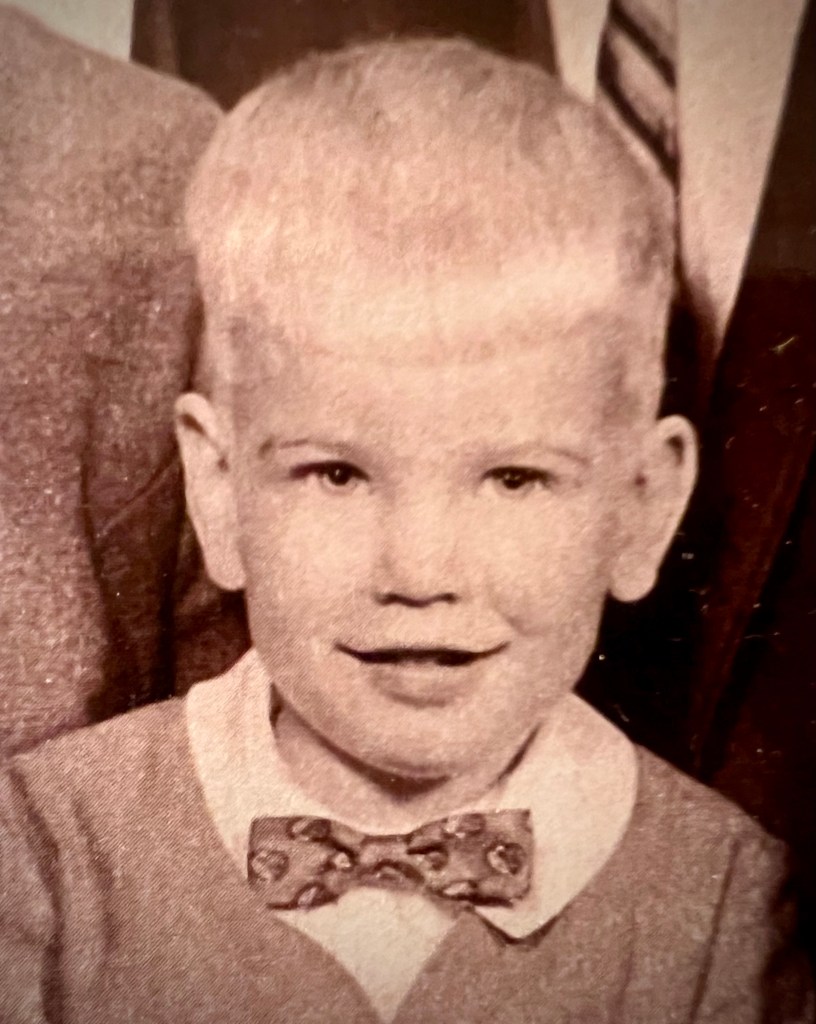
Raised in the 1970s in the Midwest as an American male, I learned early in life that it was not acceptable for me to show any kind of weakness – especially, to cry in public. Instead, I was taught to keep a stiff upper lip and let whatever was bothering me to roll off my back, like water off a duck. At least, this was the idea.[2]In reality, of course, emotions that are denied are unable to be processed and accumulate in our system until they express themselves in other, less healthy ways. Like all of my friends and their brothers and fathers and uncles, I learned to practice the subtle art of denial when it came to dealing with any sad emotions. Picture Tom Hanks in A League of their Own: “Are you crying? There is no crying in baseball!“
In the winter of 1975 my sister Susie fell on my arm while we were playing on a huge snow pile in the church parking lot. When I started to cry, she scolded me: “Don’t be such a cry baby!” I finally relented and went inside, where nurse Ingrid appeared and knew instantly that my wrist had been fractured. The emergency room physician who fixed my wrist was impressed that I was able to be brave and not cry. He said, “Mrs. Anderson, you have a superb boy.”
The consequences of denying the expression of emotions, including sadness, on our emotional life are profound:
“When we send our grief into exile, we simultaneously condemn our lives to an absence of joy. This gray-sky existence is intolerable to the soul. It shouts at us daily to do something about it, but in the absence of meaningful ways to respond to sorrow or from the sheer terror of entering the terrain of grief naked, we turn instead to distraction, addiction, or anesthesia.
On my visit to Africa, I remarked to one woman that she had a lot of joy. Her response stunned me: “That’s because I cry a lot.” This was a very un-American sentiment. She didn’t say it was because she shopped a lot, worked a lot, or kept herself busy. Here was . . . sorrow and joy, grief and gratitude, side by side. It is indeed the mark of the mature adult to be able to carry these two truths simultaneously. Life is hard, filled with loss and suffering. Life is glorious, stunning, and incomparable. To deny either truth is to live in some fantasy of the ideal or to be crushed by the weight of pain. Instead, both are true, and it requires a familiarity with both sorrow and joy to fully encompass the full range of being human.[3]Weller, Francis. The Wild Edge of Sorrow (pp. 110-112). North Atlantic Books. Kindle Edition.
I can’t remember the last time I cried, either sad or happy tears. But I am committed to allowing the limits of my usual emotions to expand, including re-learning how to cry. A life filled with more tears will make me a more complete human being.
“When death finds you, may it find you alive.” – African Proverb
References
| ↑1 | https://www.ncbi.nlm.nih.gov/pmc/articles/PMC6609137/ |
|---|---|
| ↑2 | In reality, of course, emotions that are denied are unable to be processed and accumulate in our system until they express themselves in other, less healthy ways. |
| ↑3 | Weller, Francis. The Wild Edge of Sorrow (pp. 110-112). North Atlantic Books. Kindle Edition. |
Discover more from Real Life Matters
Subscribe to get the latest posts sent to your email.