

A Rough Start
O-sha-gus-co-day-way-quay (Woman of the Green Glade) was the daughter of Waub-o-jeeg (the White Fisher), a highly regarded Ojibwe war chief living in Chequamegon Bay on Wisconsin’s north shore. O-sha-gus-co-day-way-quay was skilled at hunting and fishing. She was also was incredibly strong. In her retirement years, she would spend time alone in the woods each spring making maple sugar, sometimes returning with as much as two tons.[1]Parker, Robert Dale, ed. (2007). The Sound the Stars Making Rushing Through the Sky: The Writings of Jane Johnston Schoolcraft. Philadelphia: University of Pennsylvania Press. pp. 7–17.
In 1791, John Johnston, a fur trader originally from northern Ireland, befriended Waub-o-jeeg’s clan of the Ojibwe people in his travels on Lake Superior’s southern shore seeking trading partners. O-sha-gus-co-day-way-quay caught his attention immediately. Wasting no time, Johnston asked Waub-o-jeeg for his daughter’s hand in marriage. Waub-o-jeeg was reluctant, fearing that Johnston would abandon her, which white men had done to other young Ojibwe brides married in the pursuit of trading aliances.
The chief answered that he had been cheated by the French and the English alike and that he did not trust any white man. Johnston explained that he was neither French nor English, he was Irish, and that he always tried to be an honorable man. Waub-o-jeeg told him to go away for one full year. At the end of that time, if he was still interested, he should return and ask again.[2]Rydholm, C. Fred (1989). Superior Heartland, a Backwoods History (Vol. I), p. 91.
Johnston did as Waub-o-jeeg had instructed him. He returned one year later.
“Chief Waub-o-jeeg,” said the young man, “I have returned, as I promised.”
“Sit down,” motioned the Chief. “Let us smoke. Here I have some fresh kiniknick.”
“White Man, I remember my promise. I do not want my daughter left with children and no husband to provide deer meat for them. Now I ask a promise from you. . . . That you will marry her as the White Man marries a white woman – until your death!”
“I promise, good father,” Johnston said seriously. Then, each man smoked Waub-o-jeeg’s red bowled pipe to seal the promise, after which Johnston untied the cord binding the pack which was beside him, on the sand. He removed a long barreled gun, a carrot of tobacco, a bag of balls and one of powder, a woolen blanket, and glass beads, and laid them all before that chief.
“A brave of your nation would bring you a deer or beaver skins as a present to mark this occasion. I’ve only trade goods to offer you, Chief Waub-o-jeeg. Please accept my poor gifts,” said the trader.
“Your gifts will never take the place of my daughter, White Man,” returned the stately father, “but I accept them as a promise that you will stay married into your death, and as a pledge that you will always care for her and your children.” [3]Virginia Soetebier (2000). Woman of the Green Glade p. 22.
O-sha-gus-co-day-way-quay did not participate in the conversation between her father and the Irishman, nor is there any record that her opinion about the proposed marriage was ever sought. Waub-o-jeeg’s second wife simply informed O-sha-gus-co-day-way-quay to go and bathe quickly and get dressed in her best white beaded deerskin dress and leggings. O-sha-gus-co-day-way-quay did as she was told. A lively party broke out in camp. She was mortified when she learned the reason for the celebration. She was getting married that very day to Johnston!
Later in the evening, after the festivities died down, she was carried into a canoe by her father, uncles and brothers and they paddled to nearby Madeline island, where Johnston had constructed a little wooden cabin for himself the year before. Soon, the canoes all returned to the mainland. Johnston and O-sha-gus-co-day-way-quay found themselves alone with each other in the little dark cabin. O-sha-gus-co-day-way-quay was furious that her father had given her to a white man in marriage. She was also greatly afraid of Johnston. She sat motionless all night in a corner of the cabin. Johnston covered her with a blanket and then walked across the room to his bed, and eventually went to sleep. For the next ten days she ate no food. She drank water only when Johnston was outside of the cabin. She did not speak to Johnston the entire time. After ten days of this silent standoff, Johnston left the cabin to hunt and take a break.
In Johnston’s absence, O-sha-gus-co-day-way-quay took the opportunity to run. She returned to the forest near her village with the help of some young boys fishing nearby who had a canoe. She eventually returned to her village. She was relieved to find that her father was not home.
When he did return, he was furious that she had run away from Johnston and beat her with a stick. When he was finished he shouted: “Now I shall return you to your rightful husband. If you run away again, I will cut off one of your ears, and if you run away a second time, I will cut off the other one!”
Waub-o-jeeg returned O-sha-gus-co-day-way-quay by canoe to the island, and then led her to Johnston’s cabin. He then announced, “here is my daughter. She has disgraced our family and our nation by her behavior. Take these gifts; let them make up to you for what you have endured on her account. She will never leave you again. I Waub-o-jeeg, give you my word!” Johnston gently replied, “I was greatly saddened by her absence. I welcome her back. Come, let us smoke together.” [4]O-sha-gus-co-day-way-quay entered the cabin meekly and attended to her hearth for the first time. Virginia Soetebier (2000). Woman of the Green Glade pp. 36-37.
O-sha-gus-co-day-way-quay and John Johnston resettled to Sault Ste. Marie (also known as the “Soo”), which was the hub of fur trading in the Great Lakes region. His business prospered. Over time, O-sha-gus-co-day-way-quay used her maiden name less and less. She married Johnston in a civil ceremony, was baptized and took the name Susan. Her children simply called her Neengay, my mother.[5]Virginia Soetebier (2000). Woman of the Green Glade p. 68. By all accounts O-sha-gus-co-day-way-quay and Johnston grew to love each other, despite the rough start to their marriage.
Johnston was a “wintering partner” of the North West Company; one of the men who traded directly with the trappers, who were usually of Native American descent. He was a man of substance, having arrived in Canada with capital to invest in the business. He and his wife were influential in the trade and relations among the Ojibwe, Canadians, Europeans and Americans in the area. They received as hosts many explorers, politicians of both Canada and the U.S., scholars, Native chiefs, and military officers. They were considered among the ruling class in both the Native and European communities. Johnston owed much of his success to Ozhaguscodwaywayquay’s talents, influence, and connections as the member of an important Ojibwe family. Ozhaguscodaywayquay taught him and their eight children the language and ways of the Ojibwe. While she learned to understand English, she only spoke Ojibwe. John taught them to speak, read, and write English, and had a large library from which some of the children particularly drew.[6]https://en.wikipedia.org/wiki/Ozhaguscodaywayquay
In 1818, Lewis Cass was appointed governor of the territory of Michigan, which included Michigan, as we know it today, plus all of Wisconsin and part of Minnesota. He proposed a government expedition to survey the region, which he would personally lead: “all told, the expedition consisted of 40 men traveling in 3 large birchbark canoes, 35 feet long and 6 feet wide, each capable of a cargo of 4 tons. Leaving Detroit amid much fanfare on May 24, 1820, they took just over two weeks to reach Mackinac Island, where they remained a week to gather in additional supplies.
Next, they headed for Sault Ste. Marie to meet with some Chippewa (Ojibwe) chiefs. From Fort Mackinac they picked up two more canoes and twenty-two soldiers provided by the Commandant of the garrison for the Governor’s protection. This brought the expedition to the full complement of forty. The second day out of Fort Mackinac, the flotilla passed the ruins of the British fort on St. Joseph’s Island, which the American troops had burned in 1814 at the end of the 1812 War.” [7]Rydholm, C. Fred (1989). Superior Heartland, a Backwoods History (Vol. I), pp. 95-96.
The British fort at St. Joseph was the fort from which the British launched their first offensive of the War of 1812.[8]See https://realifematters.com/2021/04/25/first-people/ Johnston served as a Captain in the British Army. He helped lead the attack on Mackinac Island.
At the Soo, they met the family of John Johnston. Johnston himself was not home but his wife Susan was – she was the most influential person in the area – and she and her son George were very hospitable. They brought the party to a camping spot near a Ojibway village of some 200 or 300 men, women and children. George Johnston introduced Cass to the Chiefs.” [9]Rydholm, C. Fred (1989). Superior Heartland, a Backwoods History (Vol. I), pp. 95-96.
From this point, things quickly took an ugly turn.
Governor Cass asked the Indian leaders for a piece of land on which to construct a fort that would secure the border between the United States and Canada. This made the Indians very solemn, as they had fought beside the British in the war of 1812 and were still loyal to their former allies.
After a day of discussing the question among themselves, one of the Chiefs, named Sasseba, who had been nicknamed “The Count,” appeared in a full British officer’s uniform and spoke angrily to the governor. He thrust his spear into the ground, kicked aside the presents which had been presented to him, and stalked from the tent, followed by the others. Later, Captain Douglass saw Sasseba raise a British flag in front of his lodge. He notified Cass, who ordered his soldiers to arms.
Taking his interpreter with them, Cass marched into the Indian village, through a group which had assembled. He tore down the flag and trampled it underfoot. Through his interpreter he told the Indians that this was American soil and only the American flag could fly here. If the British flag was raised again, the Indians would be destroyed. Cass’s audacity caught the Indians so off guard that none made a move to stop him as he carried the British flag back to his tent.
The Indians held a council of war that went on into the night. Hostility rose, but when it seemed as though a battle could not be averted, O-sha-gus-co-day-way-quay came to the council fire. She told the chiefs not to take sides in the rivalries of white nations. To do so would only bring suffering and vengeance upon their own people. She said that they should negotiate a treaty that would benefit the Indians and that everyone could live with.
This could have been a serious incident, as Cass’s party was greatly outnumbered, but the Indians had great respect for Susan Johnston and they listened to her and agreed. They drew up and signed a treaty that ceded a tract of land on which Fort Brady was built 2 years later. In the treaty, as in most of the treaties of the Lakes Indians, it was specified among other things that they be allowed to fish the rapids forever.” [10]Rydholm, C. Fred (1989). Superior Heartland, a Backwoods History (Vol. I), pp. 95-96.
Making Peace
Finding a peaceful resolution to disputes is difficult. Once the “flight or fight” response has been triggered, the urge to be right can be irresistable.
O-sha-gus-co-day-way-quay’s intervention in 1820 at the Soo between Cass and his soldiers, and Sasseba and his warriors, shows that the way of peace takes great courage and inner strength. Defying the odds against her, O-sha-gus-co-day-way-quay, an Ojibwe woman, negotiated a peaceful resolution to this conflict.
In the movie Dances with Wolves, Kicking Bird says in the Lakota language to John Dunbar, “I was just thinking that of all the trails in this life, there are some that matter most. It is the trail of a true human being. I think you are on this trail, and it is good to see.” [11]https://en.wikipedia.org/wiki/Dances_with_Wolves A human being’s highest purpose is to love. Given a chance, love can win.
Trail of Tears
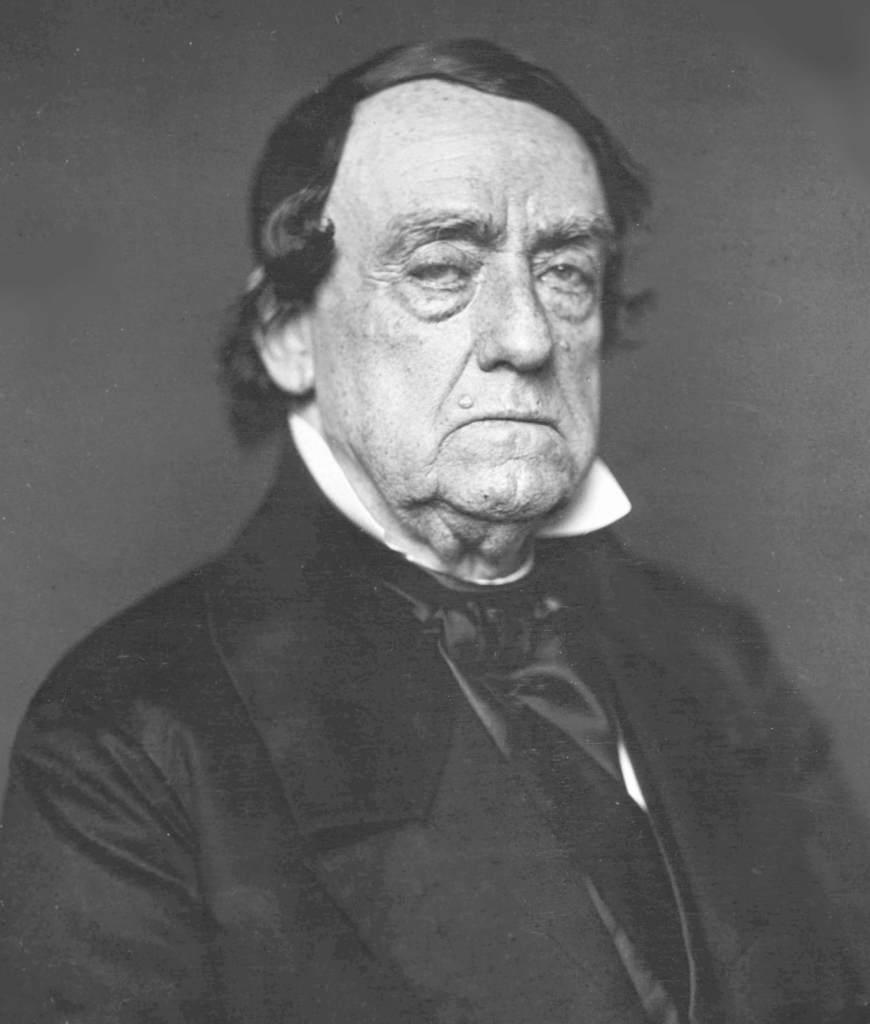
Ten years after the incident at the Soo, Governor Lewis Cass resigned as Governor of Michigan to accept President Andrew Jackson’s appointment as Secretary of War. In this capacity, he helped implement Jackson’s policy of Indian removal. Removing the Native Americans was Jackson’s top legislative priority.
Jackson’s 1830 State of the Union address provides a glimpse into his mindset toward the Native Americans:
What good man would prefer a country covered with forests and ranged by a few thousand savages to our extensive Republic, studded with cities, towns, and prosperous farms, embellished with all the improvements which art can devise or industry execute, occupied by more than 12,000,000 happy people, and filled with all the blessings of liberty, civilization, and religion?[12]https://en.wikipedia.org/wiki/1830_State_of_the_Union_Address
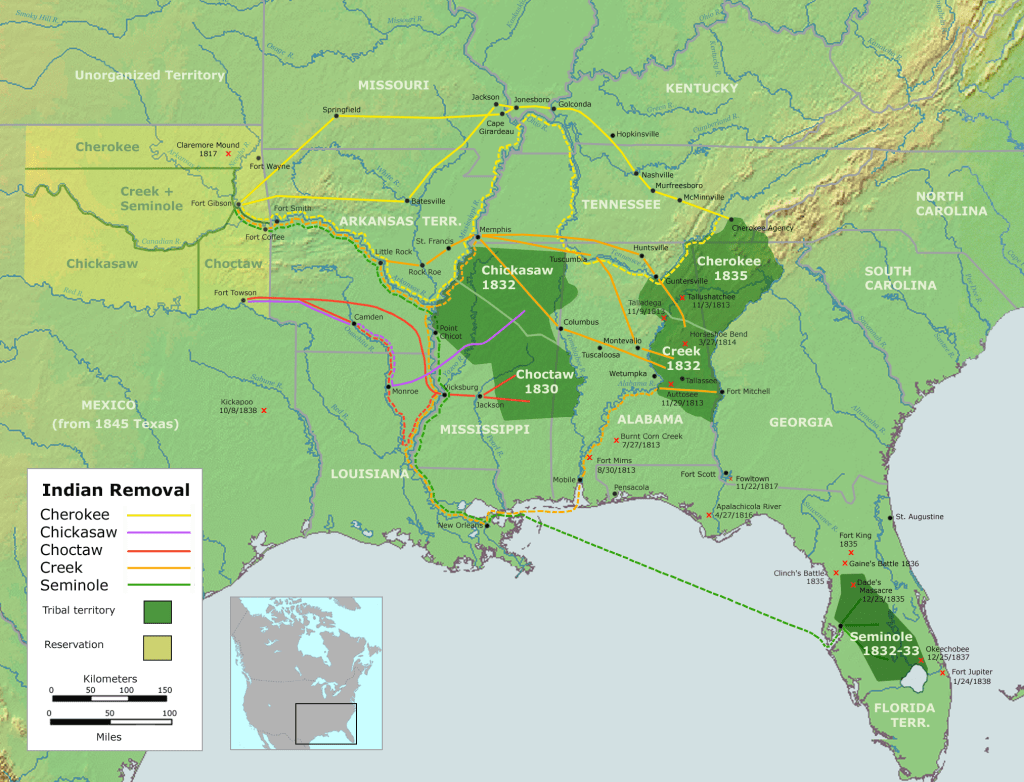
The Indian Removal Act of 1830 was signed by Jackson after a vote on razor-thin margins in the House and Senate. It was enforced under his administration and that of Martin Van Buren for eleven brutal years. After the passage of the Indian Removal Act, approximately 100,000 members of the Cherokee, Muscogee (Creek), Seminole, Chickasaw, and Choctaw nations were forcibly removed from their ancestral homelands, with thousands dying along the Trail of Tears. This period was among the saddest and darkest in American history.
Note the contempt expressed by President Andrew Jackson regarding Native Americans. He doesn’t acknowledge their unique culture and traditions, instead referring to them publicly as “Savages.” To Jackson, the Native Americans were an annoying impediment to the drumbeat of American progress.
America 2021
The situation in America today is really no different. Indeed, those who do not learn from their mistakes are destined to repeat them.
America is addicted to political contempt. While most of us hate what it is doing to our country and worry about how contempt coarsens our culture over the long term, many of us still compulsively consume the ideological equivalent of meth from elected officials, academics, entertainers, and some of the news media. Millions actively indulge their habit by participating in the cycle of contempt in the way they treat others, especially on social media. We wish our national debates were nutritious and substantive, but we have an insatiable craving for insults to the other side. As much as we know we should ignore the nasty columnist, turn off the TV loudmouth, and stop checking our Twitter feeds, we indulge our guilty urge to listen as our biases are confirmed that the other guys are not just wrong, but stupid and evil.[13]Brooks, Arthur C.. Love Your Enemies (pp. 28-29). Broadside e-books. Kindle Edition.
The challenge most of us are facing is how to give up our addiction to contempt. The answer is both obvious and perplexing:
Addicts all want to be free from addiction, and there is a lot of help out there to set them free. All they have to do is let go of the thing they hate, and ask for what they truly want. But they don’t, sometimes even until death. Why not? Most say the short-term agony of quitting is just too great, or that booze or other drugs, as terrible as they are, are the only thing that give real satisfaction in an empty life. We have a cultural addiction to contempt—an addiction abetted by the outrage industrial complex for profit and power—and it’s tearing us apart. Most of us don’t want that, though. We want love, kindness, and respect. But we have to ask for it, choose it. It’s hard; we are prideful, and contempt can give a sense of short-term purpose and satisfaction, like one more drink. No one ever said that breaking an addiction was easy. But make no mistake . . . we can choose what we truly want, as individuals and as a nation.[14]Brooks, Arthur C.. Love Your Enemies (pp. 38-39). Broadside e-books. Kindle Edition.
I admit that I am quick to reach for the bottle of contempt in my life. The broken part of me loves to scroll through Twitter, drinking from the well of self-righteousness.
Will I learn anything from the folks on the receiving end of my indignation? Only one thing is certain. If I don’t set aside my feelings, and open my heart, I cannot and will not be moved.
“There comes a time when we must stop crying and wringing our hands and get on with the healing that we are so much in need of.” – Art Solomon, Anishinabe Elder
References
| ↑1 | Parker, Robert Dale, ed. (2007). The Sound the Stars Making Rushing Through the Sky: The Writings of Jane Johnston Schoolcraft. Philadelphia: University of Pennsylvania Press. pp. 7–17. |
|---|---|
| ↑2 | Rydholm, C. Fred (1989). Superior Heartland, a Backwoods History (Vol. I), p. 91. |
| ↑3 | Virginia Soetebier (2000). Woman of the Green Glade p. 22. |
| ↑4 | O-sha-gus-co-day-way-quay entered the cabin meekly and attended to her hearth for the first time. Virginia Soetebier (2000). Woman of the Green Glade pp. 36-37. |
| ↑5 | Virginia Soetebier (2000). Woman of the Green Glade p. 68. |
| ↑6 | https://en.wikipedia.org/wiki/Ozhaguscodaywayquay |
| ↑7, ↑9 | Rydholm, C. Fred (1989). Superior Heartland, a Backwoods History (Vol. I), pp. 95-96. |
| ↑8 | See https://realifematters.com/2021/04/25/first-people/ |
| ↑10 | Rydholm, C. Fred (1989). Superior Heartland, a Backwoods History (Vol. I), pp. 95-96. |
| ↑11 | https://en.wikipedia.org/wiki/Dances_with_Wolves |
| ↑12 | https://en.wikipedia.org/wiki/1830_State_of_the_Union_Address |
| ↑13 | Brooks, Arthur C.. Love Your Enemies (pp. 28-29). Broadside e-books. Kindle Edition. |
| ↑14 | Brooks, Arthur C.. Love Your Enemies (pp. 38-39). Broadside e-books. Kindle Edition. |