

“If there ever comes a day when we can’t be together, keep me in your heart, I’ll stay there forever.” — Winnie the Pooh
I love the simplicity of hiking in the back country. After a grueling day on a demanding trail, I find a campsite, pitch my tent and cook something simple for dinner. When the sun goes down, I climb into my sleeping bag and go to sleep. When the sun comes up, I get up, eat breakfast, pack up my things, and start hiking. I frequently stop to check my map so that I know where I am and where I am heading. A wrong turn can be time-consuming and potentially dangerous. It’s always more fun to hike with family or friends, but I’m not opposed to hiking solo with appropriate safety precautions.
I recently went on a backpacking trip in the McCormick Wilderness. It comprises 17,000 acres of pristine boreal forest, streams, wetlands, and small lakes in Michigan’s upper peninsula. The McCormick Wilderness is in bear country, though black bears in the upper peninsula are wary of humans and far less dangerous than their grizzly or Alaskan brown bear cousins – so I wasn’t too worried.
Beginning in the year 1906, Cyrus Hall McCormick II, a wealthy industrialist from Chicago, spent enormous sums building a grand camp at White Deer Lake in this wilderness. By the mid-1940s, the Camp consisted of seventeen log buildings, miles of boardwalk trails, canals, a dam to regulate the lake level, plumbing, an electrical system, a floating tennis court, a French chef, and an English butler. The Camp’s many visitors included Henry Ford and Harvey Firestone. They enjoyed all that the wilderness has to offer plus a surprising number of modern luxuries.
All that remains today of the Camp are cement building foundations in various states of collapse, an abandoned plumbing system, and some wooden pilings that once secured a small ferry boat that connected the mainland to the island. The many visitors to the grand Camp at White Deer Lake have long since passed on. Their vivid memories from this unique place have vanished forever.
Gone also are the intense discussions about the manufacture and sale of tractors, the market price of a share of common stock in International Harvester Company, America’s involvement World War I, the best strategy for dealing with the flu pandemic of 1918, the stock market crash of 1929, the Great Depression, and World War II. Apart from the blowing of the wind, an occasional loon singing, squirrel chattering, or dragonfly buzzing, White Deer Lake is now completely silent.
In Psalm 90, Moses wrote the following prayer, “Teach us to number our days, that we may gain a heart of wisdom.” From what I have read about Cyrus Hall McCormick II, he seemed to have learned this critical lesson late in life:
[He] became more withdrawn and contemplative. His wife died and he married his secretary, to the consternation of the international social circles in which he traveled. Then came a series of family embarrassments culminating in his brother’s well-publicized and medically avant-garde experiment with a gland transplant operation. The procedure was intended to improve the brother’s sexual prowess while he pursued a Polish opera singer. The donor was a monkey from Chicago’s Lincoln Park Zoo.
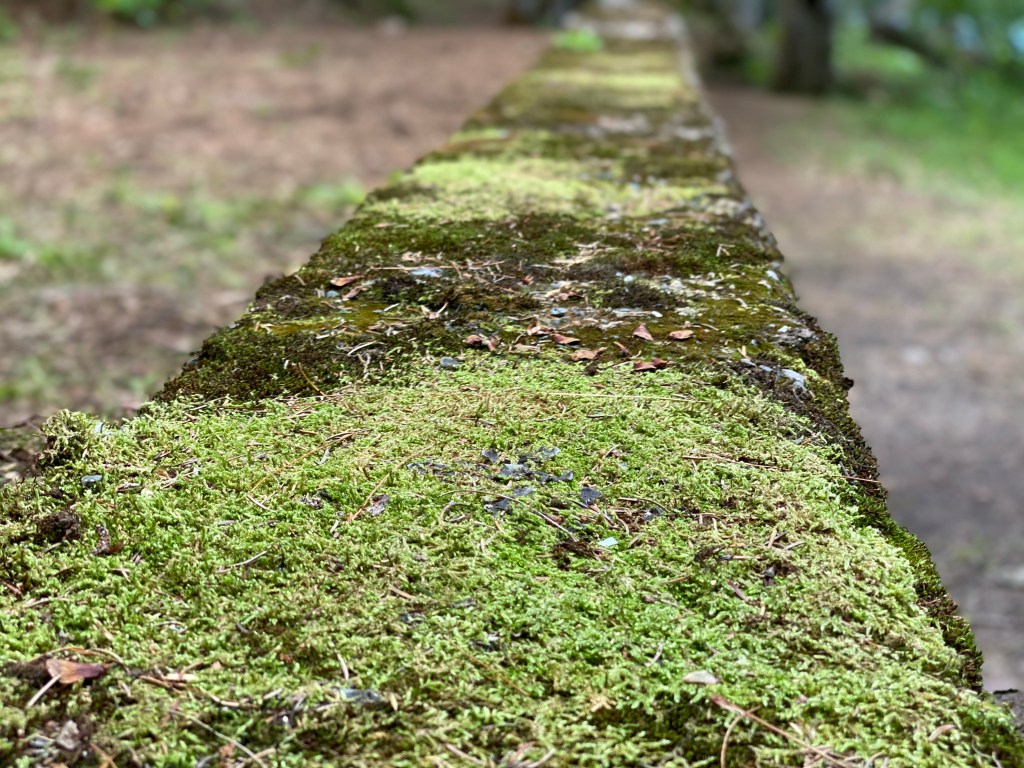
The wistful McCormick, contemplating human sadness and fatuity, liked to stroll short distances to favorite spots on the property and sit for hours as an observer. One day, his eyes were captured by a glacial boulder, covered with moss and sprouting oak ferns and wildflowers in its crevices. He remembered how his first wife, Harriet, liked to sit by this boulder, looking out across the lake, in the early days of the Camp. It had been one of her favorite places. He decided to have the boulder moved to the family cemetery plot in Chicago as a memorial to her. The rock weighed 24 tons. Nine bridges had to be shored up with temporary pilings as the boulder was dragged by a fleet of International Harvester supertractors down the Peshekee River grade to the town of Champion. From there, a special train hauled the boulder, now wrapped in wet burlap to preserve its delicate flora, to Chicago. The monument now rests in Graceland Cemetery, mossless, fernless, flowerless—mostly buried—and barely noticeable beneath a thicket of yews. A few hundred feet away, on an island in the middle of an artificial pond, surrounded by willows, stands a Grecian temple with the name “McCormick” inscribed on its entablature. “Rough Camp,” the Rise and Fall of a “Great Camp” in Michigan’s North Woods.
For a man who had acquired the finest things that money could buy, McCormick’s heart was aching. As he gazed across White Deer Lake in his final season of life, I wonder whether he thought about how different his life could have been.
Gordon McCormick, the son of Cyrus McCormick, bequeathed White Deer Lake and the surrounding wilderness to the U.S. Forest Service upon his death in 1967. It had been neglected for many years. In 1984, Richard Hendricksen, a self-styled “failed real estate developer,” from Manistee, Michigan, submitted a successful bid to the Forest Service to purchase and remove all of the wooden structures from White Deer Lake for the sum of $50. It took him two years to finish his work. When he was done, the U.S. Army Corps of Engineers used dynamite to explode the chimneys, which were still standing. Then they burned everything to the ground.
Sitting on a rocky bluff overlooking White Deer Lake, which McCormick is said to have loved, time seemed to stand still. I walked around the remains of the Camp quietly and slowly and tried to make sense of it all. The things that captured my attention were not urgent. But they were profound. I felt grateful and alive as I sat on my rocky perch in the afternoon sun. Life is precious, and my visit to White Deer Lake reminded me that I will only be here for a moment. I lifted my backpack onto my shoulders and climbed the trail leading back to where I had started. I couldn’t wait to get back home.
“Unless you build your first house well, you will never leave it. To build your house well is, ironically, to be nudged beyond its doors.” – Richard Rohr
For historic pictures and more information, check out “Rough Camp,” the Rise and Fall of a “Great Camp” in Michigan’s North Woods.